
Healthcare is one of the most sensitive domains you can build for. Unlike launching a social app or e-commerce platform, healthcare products handle Protected Health Information (PHI) — data protected by strict regulations like HIPAA in the US and GDPR in Europe.
The Stakes: Why Technical Compliance Matters From Day Zero
HIPAA violations cost between $100 and $50,000 per violation, with maximum annual penalties of $1.5 million per category. GDPR fines reach up to €20 million or 4% of global revenue — whichever is higher. British Airways paid £20 million for a single data breach.
But the real cost isn't just financial. A telemedicine startup launched using standard cloud infrastructure, only to discover six months later that they needed HIPAA-compliant services. The migration took four months, cost $180,000, and delayed critical features. A mental health app built without audit logging had to turn away enterprise customers who required security audits.
The pattern repeats: move fast without considering compliance, then pay 10x-50x more to retrofit it later.
This Guide Shows You What to Build, Not What Legal Paperwork to File
This is a technical guide for founders and developers: what architecture decisions to make, what features to build, and how to create compliant products without sacrificing speed. We'll show you exactly what needs to be in your code, database design, and infrastructure from day one, and what can be enhanced later.
What Compliance Actually Means (For Your Tech Stack)
Most founders think compliance is a legal checkbox. It's not—it's an engineering challenge affecting every line of code you write.
HIPAA = How You Build, Store, and Transmit Health Data
HIPAA requires specific technical safeguards when handling PHI:
- encrypt data at rest and in transit
- implement access controls tracking who views what
- maintain audit logs for six years
- document breach notification processes
- ensure all vendors sign Business Associate Agreements (BAAs).
GDPR = How You Architect User Control Into Your System
GDPR applies the moment you have a single EU user:
- users must download all their data
- request complete deletion
- granular consent management for different data uses
- documented data flows
- data stored in specific geographic regions.
Compliance-by-Design: Four Principles to Guide Every Decision
Before diving into implementation, understand these principles that should guide every technical decision.
Principle of Least Privilege
Junior support staff see appointment times, not clinical notes. Marketing sees anonymized analytics, not identifiable patient data. Every permission needs justification. Design your UI to only show what each role should access, buttons for actions users can't perform shouldn't even render.
Data Lifecycle Management
Define retention policies from day one: lab results kept 10 years (medical-legal requirement), session logs 6 years (HIPAA), marketing analytics 2 years. Implement automatic deletion jobs that run monthly. Your database schema should include created_at and retention_until fields from the start.
Defense in Depth
Never rely on a single security measure. Layer protections: network security (VPC, firewalls) + application security (authentication, authorization) + data security (encryption) + monitoring (intrusion detection). If one layer fails, others protect you.
Privacy by Default
New features should be opt-in, not opt-out. New data collection requires explicit consent. Default settings should be privacy-protective. When adding "share with family" features, default to OFF. Make users actively choose to share.
How Compliance Shapes Real-World Products
Compliance translates directly into features you build. Here's what to implement in your first weeks, with common mistakes that derail startups.
Phase 1: Foundation - Architecture Decisions
Cloud Infrastructure
Common mistake: Launching with standard AWS/Google Cloud thinking "we'll upgrade later." Regular cloud services aren't HIPAA-compliant by default — you need specific service tiers and signed BAAs.
What to build: Select AWS HIPAA-eligible services (RDS, S3, EC2), Google Cloud Healthcare API, or Azure for Healthcare. Sign BAAs with your cloud provider before storing any data.
Why you can't postpone: Migrating from non-HIPAA to HIPAA infrastructure means moving entire databases, reconfiguring networks, and potentially days of downtime. One startup faced a 4-month migration costing $180K. The cost difference between standard and HIPAA-eligible services? Usually zero—it's just selecting the right tier.
Database Encryption
Common mistake: Thinking "encryption solves everything" or worse, "we'll encrypt later." Encryption is one requirement among dozens — you still need access controls, audit trails, authentication, session management, and more.
What to build: Enable encryption on all databases before creating your first table. Configure SSL/TLS for all database connections. Store encryption keys in AWS KMS or similar key management services.
Why you can't postpone: Encrypted and unencrypted databases use different storage formats. Enabling encryption on existing RDS instances requires creating new encrypted instances and migrating all data — a multi-day project with rollback complexity. Do it from the start — it's a single checkbox.
Authentication System
Common mistake: Building custom authentication to save time, or skipping MFA thinking it's "enterprise-only." Custom auth is where security vulnerabilities hide, and MFA is increasingly expected even by individual users.
What to build: Implement OAuth 2.0 or OpenID Connect, require MFA for users accessing PHI, use industry-standard libraries (Auth0, AWS Cognito) rather than custom solutions.
Why you can't postpone: If you build weak authentication initially, you'll have session management, password reset flows, and security assumptions scattered throughout your codebase. Retrofitting proper auth means rewriting core user flows while users are active.
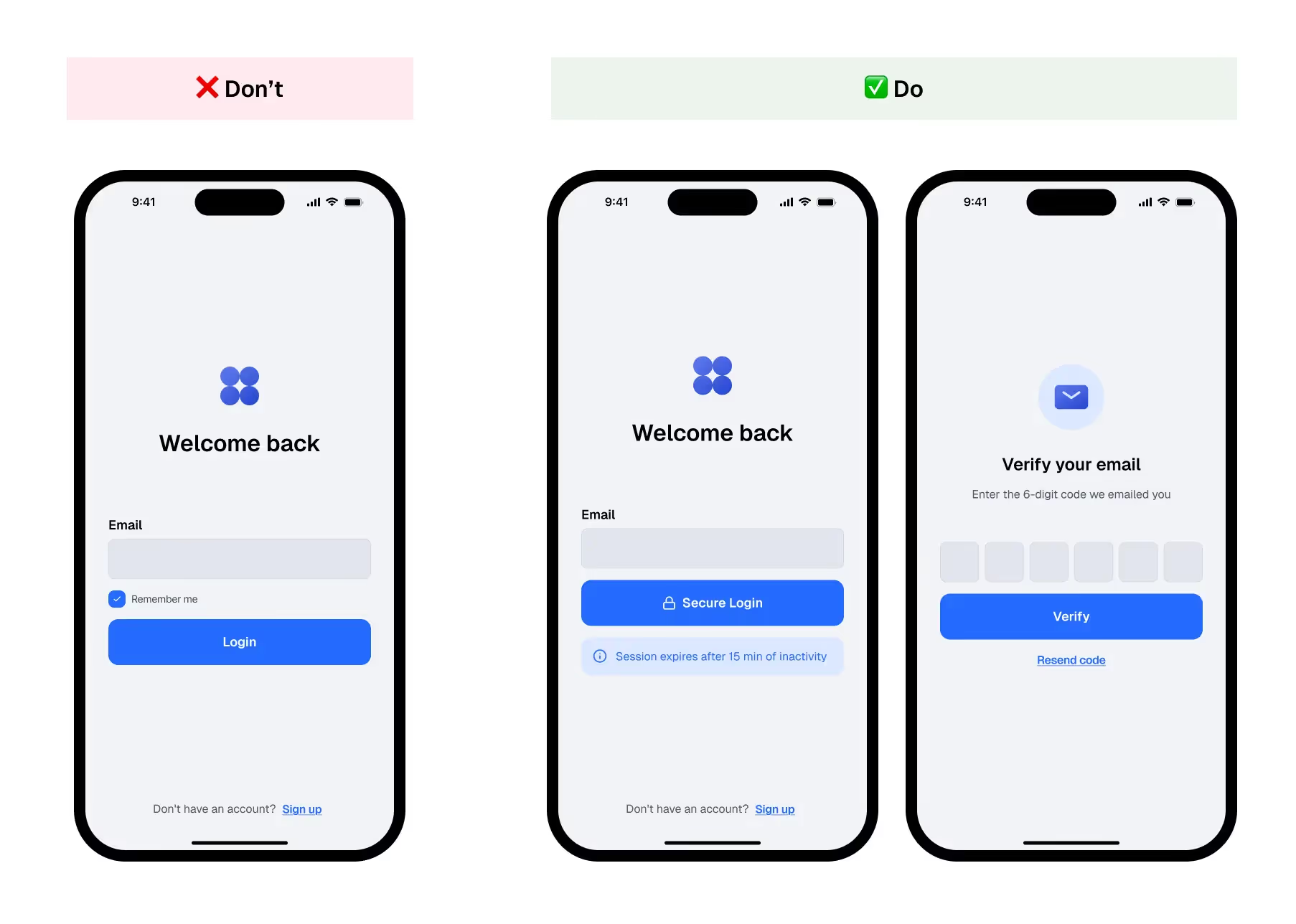
❌ Don't: Single password field with "Remember me" checkbox, no indication of security level
✅ Do: Clear security indicators, MFA requirement, session timeout notice
Phase 2: Core Features - User-Facing Functionality
Role-Based Access Control
Common mistake: Hard-coding permissions or assuming "only the app needs to be compliant" — every integration, database, backup, and vendor that touches PHI needs consideration.
What to build: Create a permissions system where doctors can access full clinical records and required medical coding, nurses can see treatment plans and care data without billing or insurance details, and administrative staff can access scheduling and operational data without clinical notes or diagnoses. Enforce these rules through centralized authorization middleware that validates permissions before any data is queried or returned.
Why you can't postpone: Without RBAC from the start, authorization checks get scattered everywhere—controllers, database queries, templates. Adding it later means finding and refactoring every data access point.
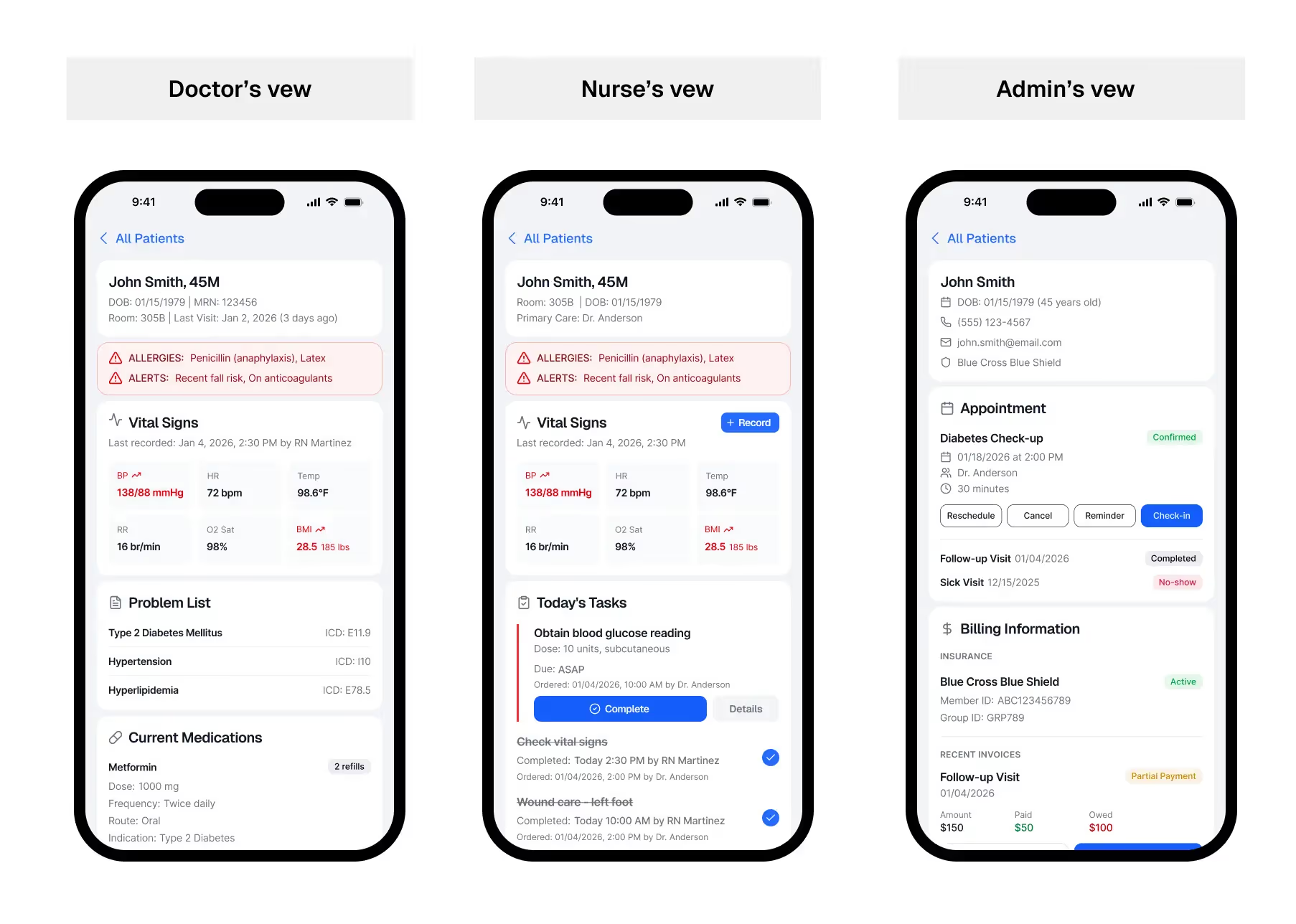
❌ Don't: Same dashboard for all users with hidden elements
✅ Do: Role-appropriate interfaces from the start
Audit Logging
Common mistake: Skipping logging entirely or thinking GDPR is "just a cookie banner"—it actually requires data export APIs, deletion workflows, consent management, data processing records, and geographic routing.
What to build: Log every PHI access: user_id, patient_id, timestamp, IP address, action taken. Store in append-only tables or dedicated logging services (CloudWatch, Datadog). Retain for six years minimum.
Why you can't postpone: You can't retroactively log the past. HIPAA requires six years of logs. Launch without logging, and you've created a permanent compliance gap. When auditors arrive in year three, missing years one and two is an automatic violation.
Session Management
Common mistake: Thinking you can "add security later"—security and compliance are architectural decisions you can't bolt on afterward.
What to build: 15-minute idle timeouts for sessions accessing PHI. Absolute maximum session length even if active. Server-side session state that can't be manipulated by clients.
Why you can't postpone: Session management affects authentication flows, user experience, and security assumptions throughout your app. Changing it later means coordinating frontend and backend changes across every authenticated feature. Retrofitting compliance costs 10x-50x more than building correctly from day one.
GDPR Data Rights & Geographic Routing
Common mistake: Building data models without considering deletion workflows, then facing months of refactoring when "right to be forgotten" requests arrive.
What to build: Create /api/user/export that packages all user data into a downloadable format, and /api/user/delete that triggers cascading deletion across all tables. Route EU users to EU servers, US users to US servers. Only collect necessary data: if building a symptom checker, you need symptoms and basic demographics, not social security numbers.
Why you can't postpone: GDPR requires a 30-day response to data requests. If you can't comply, penalties start at €10 million. The first version can be simple, but the capability must exist from day one. Over-collection increases compliance burden and liability.
Phase 3: User Controls - Building Trust Through Transparency
Consent Management
Common mistake: One "agree to everything" checkbox, or thinking consent is just a legal requirement rather than a trust-building feature.
What to build: Separate essential functions from optional ones. Let users toggle: "Share anonymized data for research" (off by default), "Receive health tips" (opt-in), "Essential appointment reminders" (can't disable—explain why). Store each consent with timestamps in a user_consents table with version tracking.
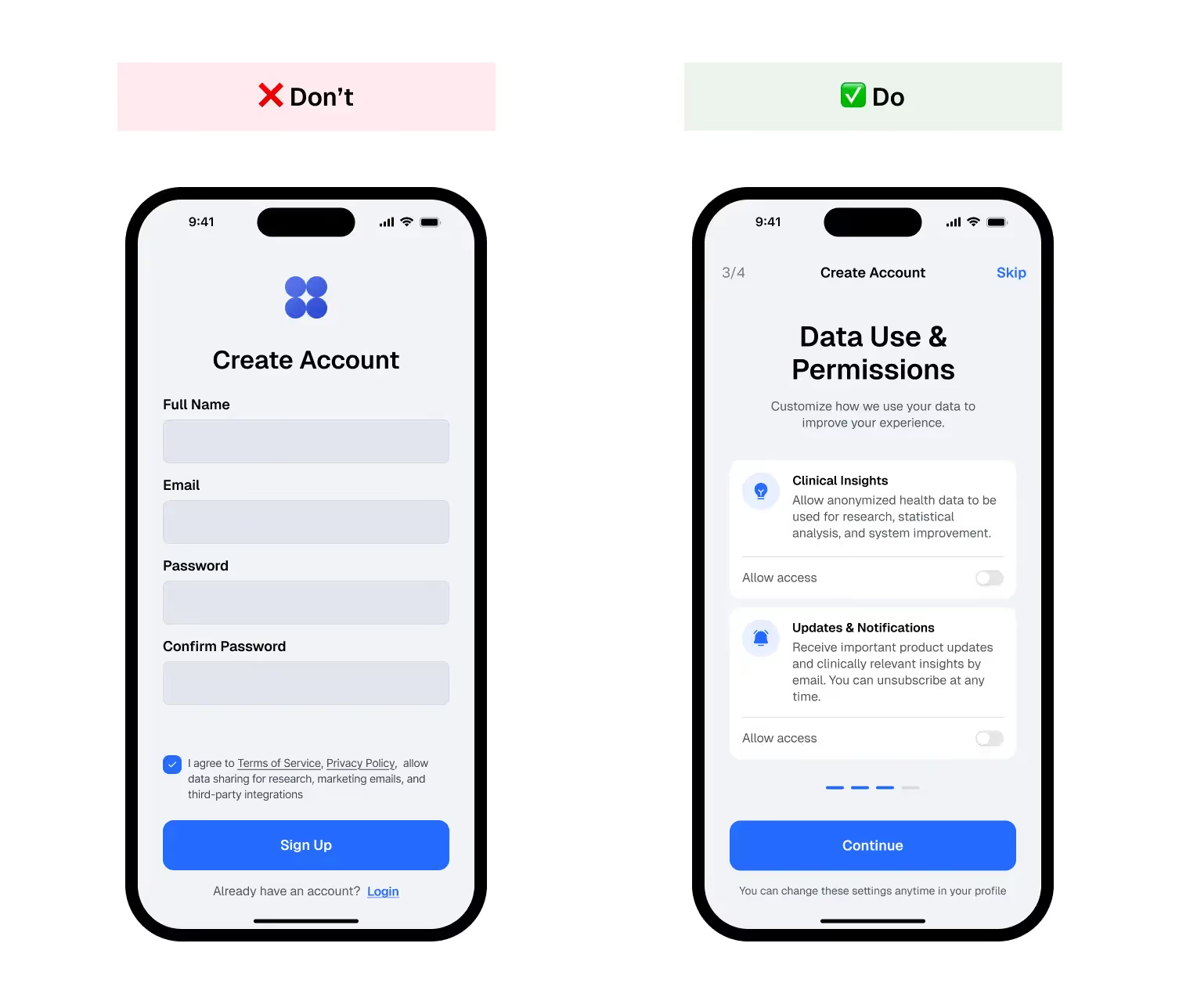
❌ Don't: Wall of text with a single checkbox
✅ Do: Granular, clear controls with explanations
Account Deletion
Common mistake: "Delete" that just hides data without removing it, or forgetting to delete from backups and caches.
What to build: When users delete accounts, remove data from: user tables, health records, appointments, messages, shared documents, backups (document retention), and third-party services. Implement soft deletes first (30-day grace period), then hard delete automatically.
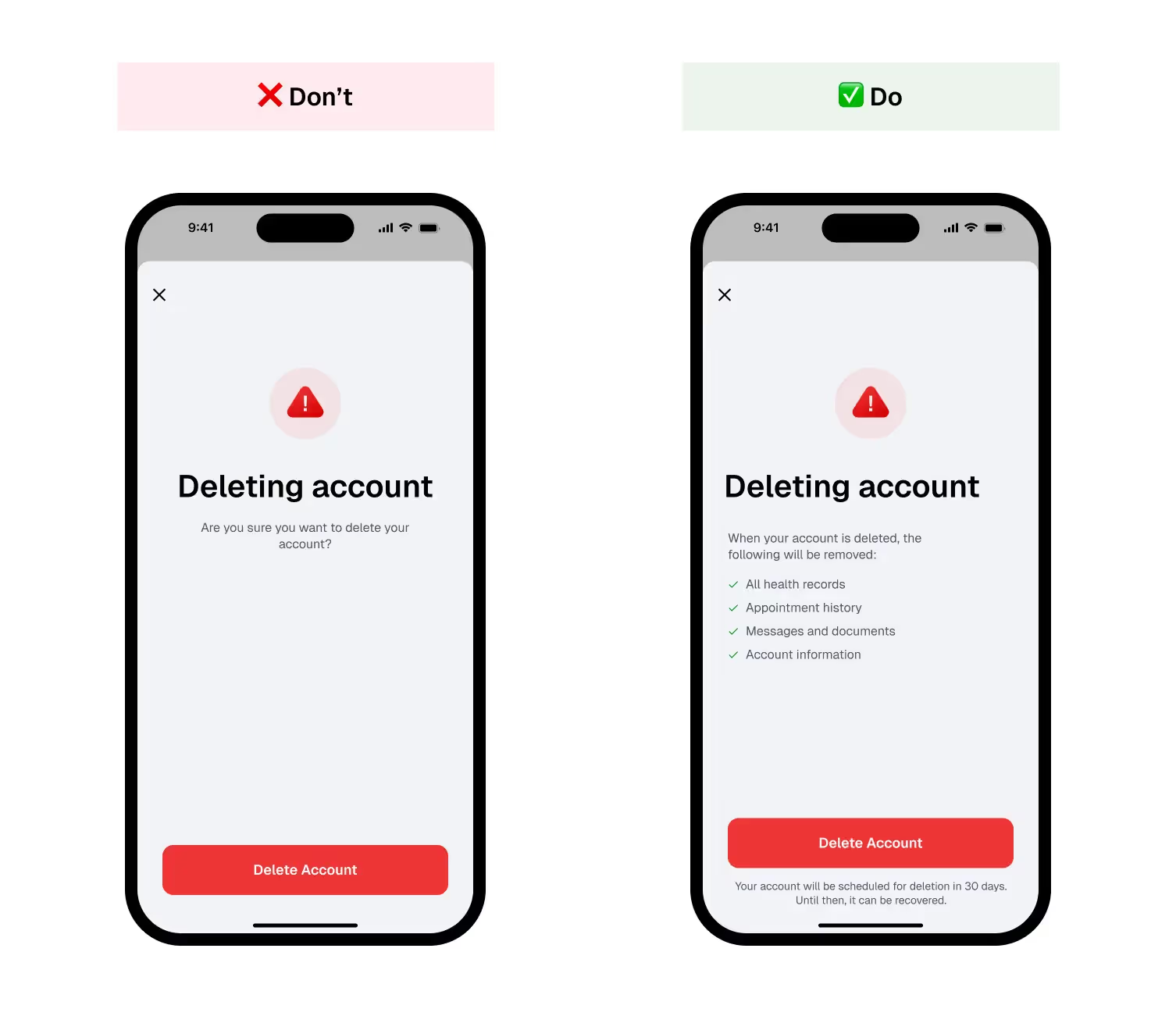
❌ Don't: Unclear deletion with no confirmation of what happens
✅ Do: Transparent process with clear explanation
What You Can Build Simply Now and Enhance Later
Not everything needs to be perfect in your MVP. Here's what can start simple:
- Consent Management: Start with checkboxes and basic toggles. Enhance to beautiful dashboards later.
- Audit Logging Dashboard: Store logs from day one, but build visualization tools later when you have more data.
- Data Export UX: Begin with JSON exports via API. Add PDF formatting, multiple formats, and self-service portals later.
- Access Controls: Start with basic roles (admin/user). Add fine-grained permissions as your team grows.
The key: Build the underlying functionality now (logging exists, deletion works, consent is tracked), then enhance the user experience later. Never skip the functionality thinking you'll add it later — that's the path to expensive retrofits.
Beyond HIPAA and GDPR: Other Regulations to Consider
Depending on your product, you may need additional compliance:
FDA 21 CFR Part 11 -- when building medical device software.
- Requires electronic signature validation
- Stricter audit trail requirements
- System validation documentation
State Privacy Laws -- when serving US residents.
- California CCPA, Colorado Privacy Act
- Similar requirements to GDPR (data export, deletion, opt-out)
- Often stricter than HIPAA
GxP Regulations -- in clinical trials or pharmaceutical.
- Good Clinical Practice (GCP) for trials
- Good Laboratory Practice (GLP) for labs
For a comprehensive overview of all healthcare regulations, see our guide: Healthcare Compliance Examples: HIPAA, GDPR, and Beyond
How We Help Healthcare Founders Build It Right
Uptech is a software development partner for healthcare innovators, focused on building dependable digital solutions. We work with companies of different scales, from bootstrapped startups and VC-backed scale-ups to SMBs and Fortune 500 enterprises.
Our approach is simple: compliance isn't a constraint — it's an opportunity to build features that differentiate your product and build user trust.
We help clients navigate the technical complexity of HIPAA and GDPR by:
- Architecting compliant infrastructure from day one
- Designing user experiences where privacy features feel natural, not forced
- Building scalable systems that pass audits without sacrificing development speed
- Providing technical guidance on which compliance features are launch-critical vs. nice-to-have
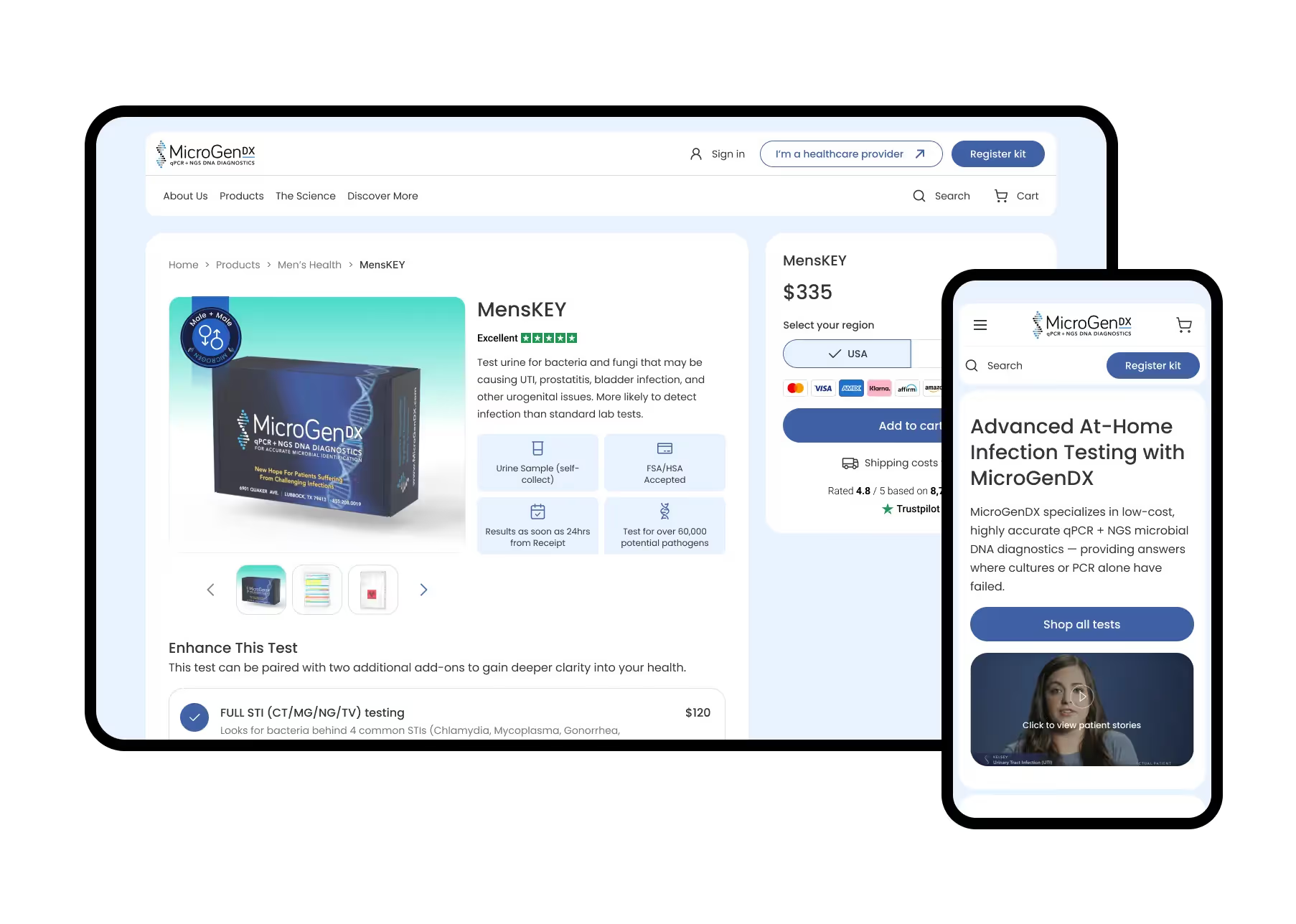
MicroGenDX — B2C & B2B Diagnostics Platform
Healthcare diagnostics company (US & EU) needed to separate B2C and B2B workflows while meeting strict HIPAA requirements and scaling across regions.
We rebuilt the B2C platform from scratch, redesigned the B2B website, and later delivered a full ecosystem including a custom admin panel and native iOS and Android apps — all architected with compliance at the core. Learn more in our case study.
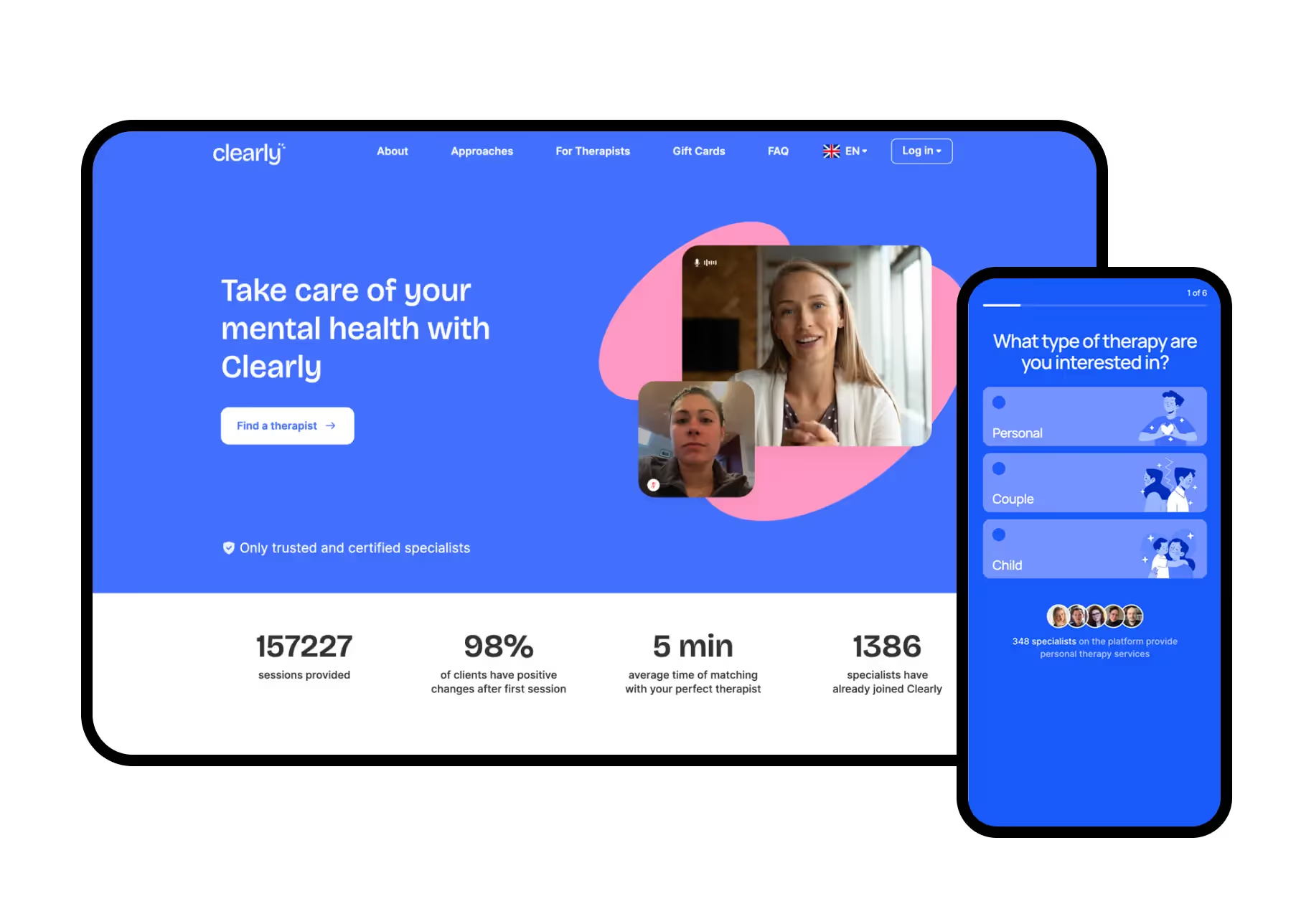
Clearly — Mental Health Marketplace
Clearly is an internal Uptech R&D product created to address limited access to mental health care across Europe. We designed and built the platform from the ground up — starting with a lean MVP to validate demand, then scaling it into a full-featured, secure mental health marketplace.
The initial release focused on fast validation with a landing page, therapist directory, and messenger-based communication. After confirming product–market fit, we expanded Clearly into web and mobile applications, added secure video therapy sessions, analytics, and AI-powered features, and built dedicated tools for both therapists and patients — all with privacy and data protection embedded into the architecture.
Conclusion
HIPAA and GDPR shape how you build great healthcare products. Start with HIPAA-eligible infrastructure and encryption, implement access controls and audit logging immediately, and build simple versions of user data rights from day one. Everything else can be enhanced as you grow.
The choice is between moving fast on solid foundations or moving fast toward a wall. In healthcare, building right from the start is the only way to move fast long-term.
Ready to build your healthcare product right from day one? Let's discuss how to launch fast without the compliance debt that sinks most health tech startups.