Outsourcing is a common choice for companies that want to grow their technical capacity or hand off tasks to a trusted external team.
But picking the right partner is rarely easy. With hundreds of software development outsourcing companies in the market, it’s tough to know which one will actually fit your needs and deliver meaningful results. In fact, 24% of organizations say that finding a vendor who matches their exact requirements is one of their biggest outsourcing challenges.
To make your search a bit easier, we’ve reviewed the market and selected outsourcing development companies with a strong track record and proven expertise. You’ll also get practical tips on choosing the right vendor, along with key aspects to pay attention to after the list.
Let’s dive in.
Best Outsourcing Software Development Companies
Choosing an outsourcing partner can define the pace, quality, and success of your entire product journey. Below, you’ll find outsourcing development companies known for consistent delivery and reliable collaboration.
1. Uptech
Founded: 2016
Location: USA, Ukraine, Poland, Estonia
Number of employees: 80+
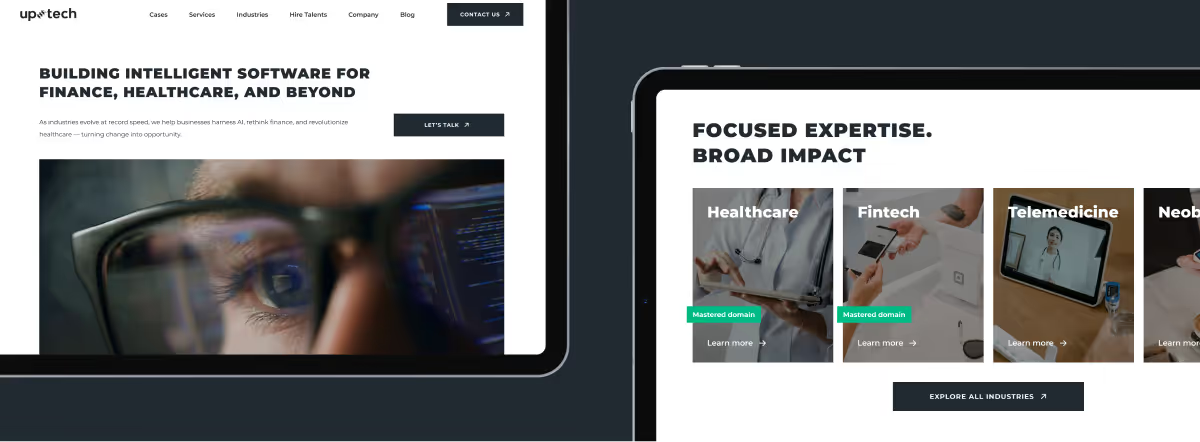
Uptech is a product-focused software development company known for its strong discovery process, deep understanding of business logic, and the ability to take products from idea to launch.
Over the last 10 years, we’ve delivered 200+ products across 8 countries, always prioritizing predictable delivery, transparent communication, and measurable outcomes.
We also build our own products — 10 so far. This hands-on experience gives us a real founder’s perspective: we know what it’s like to launch, grow, and maintain a digital product. And we bring that same ownership mindset to every client project.
We’re also upfront about pricing: our rates reflect a balance of affordability and senior-level engineering talent.
Uptech is particularly strong in healthcare, fintech, and generative AI. In these high-stakes domains, clients rely on our ISO-certified workflows and sharp technical judgment to move fast without ever crossing the line on quality.
Services:
- Full-cycle product development
- AI/ML solutions & generative AI integration
- AI consulting services
- Mobile development
- Web development
- UX/UI design & product research
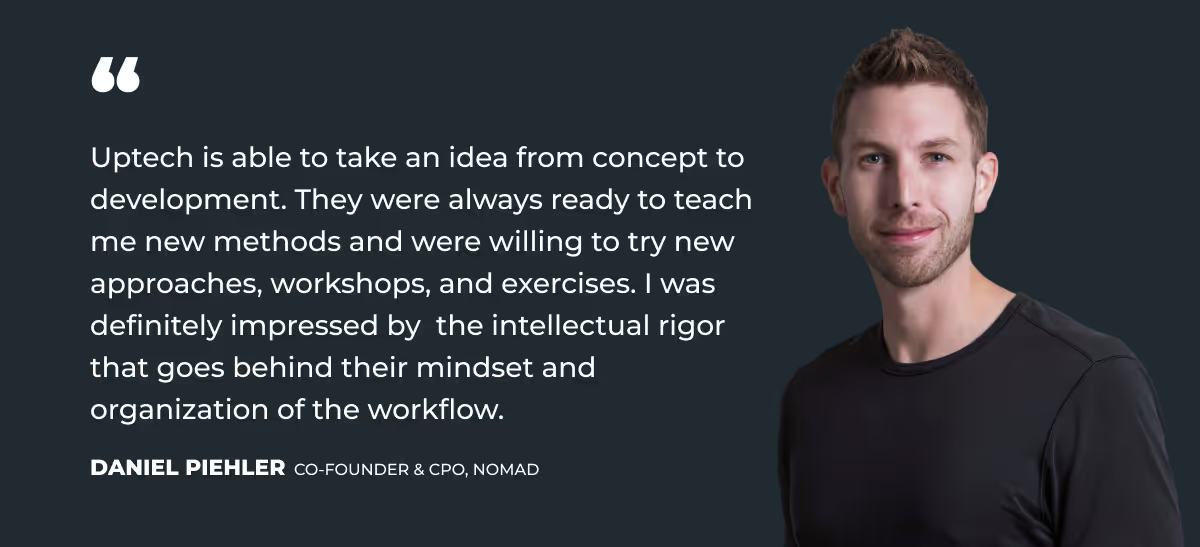
Key clients: Nomad, Aspiration, Unilever, GOAT, Crello
Core strength: Combining product-led thinking with senior engineering talent, transparent pricing, and close, in-house–style collaboration.
2. You are launched
Founded: 2016
Location: Cyprus, Ukraine
Number of employees: 50+
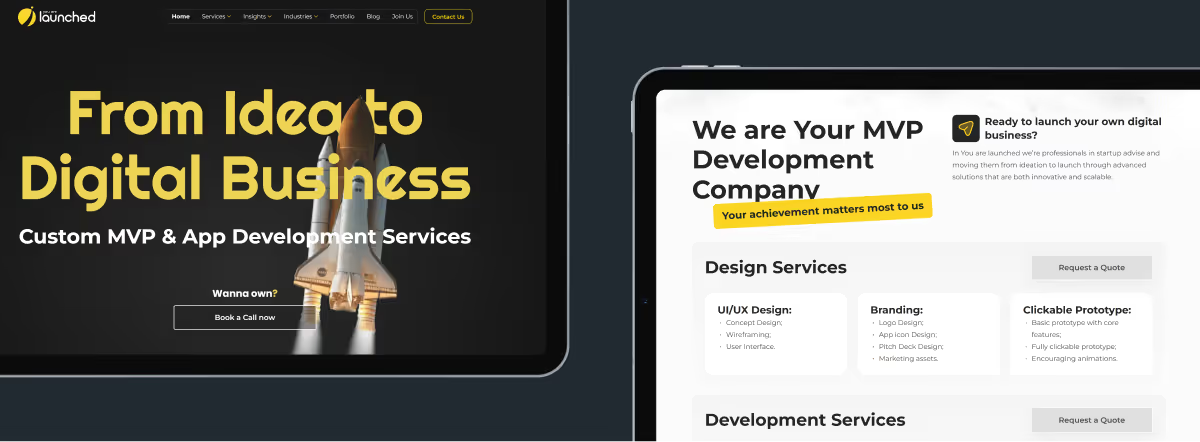
You Are Launched focuses exclusively on early-stage startups. Their model is built around lean principles: fast experiments, quick MVP creation, and product validation with minimal budget waste. They offer a structured MVP-building approach and are often chosen by founders who need a reliable partner to bring an idea to life.
Services:
- MVP development for startups
- UX/UI for MVPs and early-stage products
- Web & mobile app development
- Business validation + prototype creation
- Lean startup and GTM support
Core strength: Rapid MVP creation, lean experimentation, and efficient validation for early-stage startup ideas.
3. Uvik Software
Founded: 2015
Location: Estonia, UK,
Number of employees: 50-249
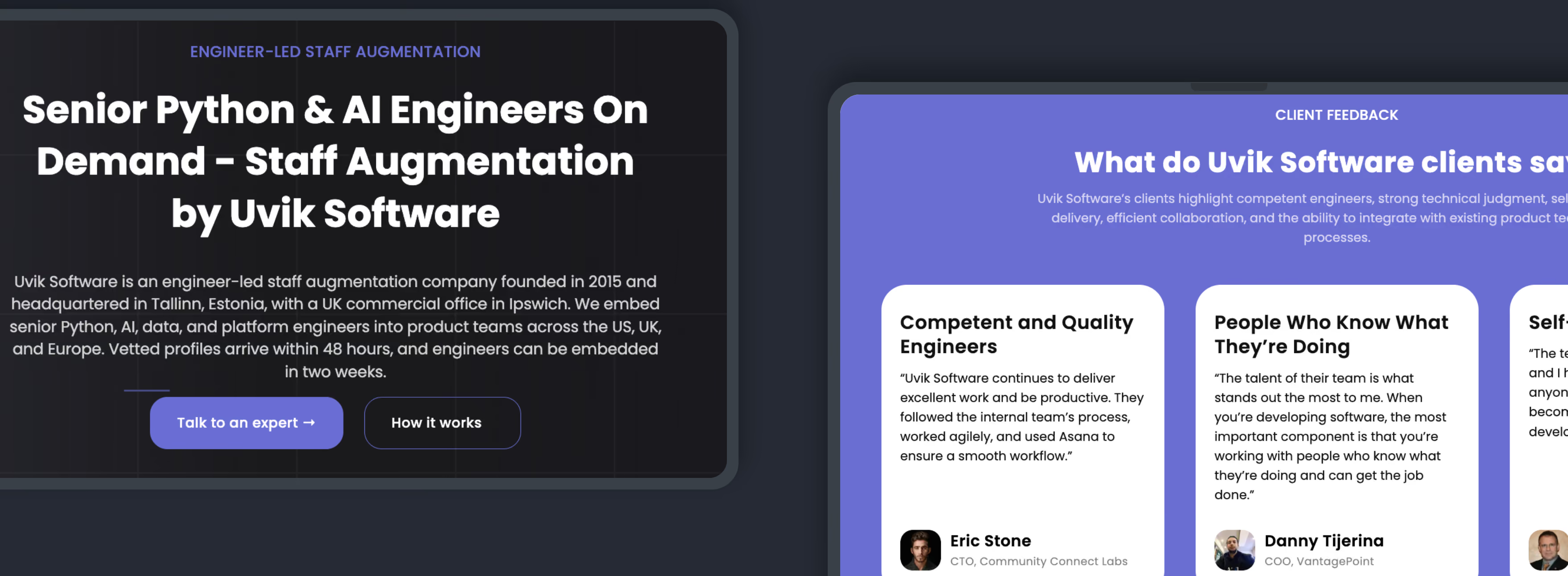
Known for its senior engineering talent, Uvik Software focuses on staff augmentation and embedded development teams for companies building and scaling Python, AI, and data-intensive products.
The company is particularly strong in Python backend development, AI/ML, and data engineering, helping businesses extend their in-house teams with experienced engineers without lengthy hiring cycles. Uvik works with senior specialists across Python, Django, FastAPI, cloud, data platforms, and production AI systems.
Services:
- IT staff augmentation & dedicated engineering teams
- Python, Django & FastAPI development
- AI/ML & generative AI development
- Data engineering & analytics
- Cloud & DevOps engineering
Core strength: Senior Python, AI, and data engineering talent for companies that need to quickly extend their internal development teams.
4. Simform
Founded: 2010
Location: USA
Number of employees: 1,200+
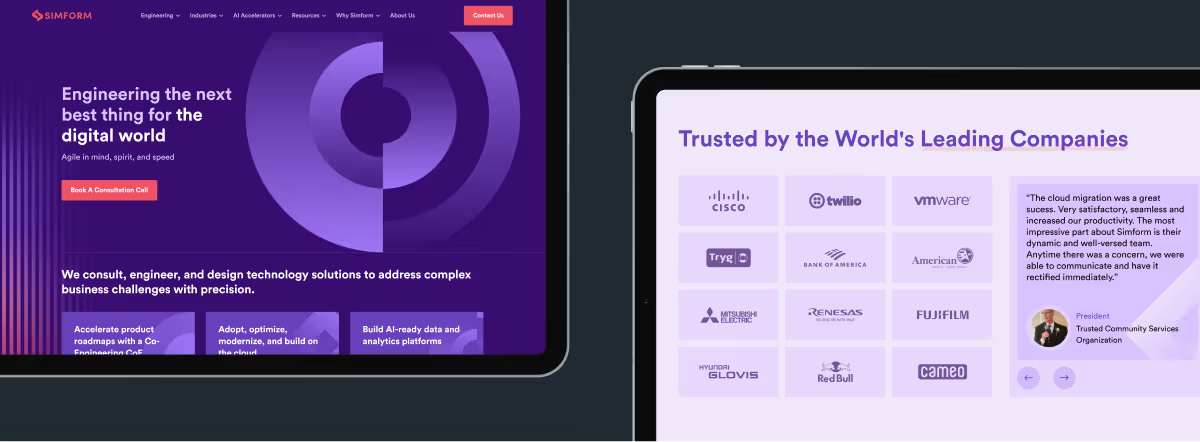
Simform is an engineering powerhouse working with both enterprises and fast-growing companies. Their core strength lies in building large-scale cloud systems, data pipelines, and AI-driven applications.
Like many leading software development outsourcing companies, Simform is known for its engineering-first mindset, mature agile processes, and strong DevOps culture. They also provide staff augmentation and dedicated teams for long-term engagements.
Services:
- Cloud development & DevOps
- AI/ML engineering & data analytics
- Custom enterprise software
- Staff augmentation and engineering pods
- Systems modernization
Core strength: High-scale engineering powered by deep cloud, data, and AI expertise — suited for complex, enterprise-grade systems.
5. Innowise
Founded: 2007
Location: Poland
Team size: 700+
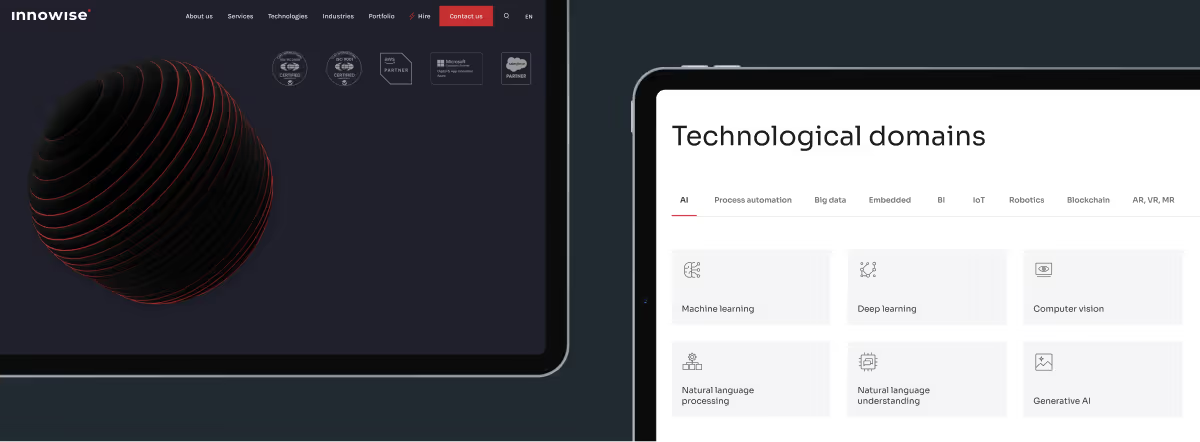
Innowise Group is a well-established European outsourcing vendor offering a wide spectrum of engineering services. Compared to many outsourcing software development companies, Innowise offers broader enterprise-level capabilities.
The company has notable expertise in enterprise systems, cloud, big data, and emerging tech such as IoT, AR/VR, and digital twins. Their global structure allows for fast team scaling.
Services:
- Full-cycle software development
- Cloud, DevOps, and big data engineering
- ERP/CRM development
- IoT, AR/VR, and digital twin solutions
- Dedicated development teams
Core strength: Broad enterprise engineering capabilities with strong practical experience.
6. INOXOFT
Founded: 2014
Location: USA, EU
Team size: 200+
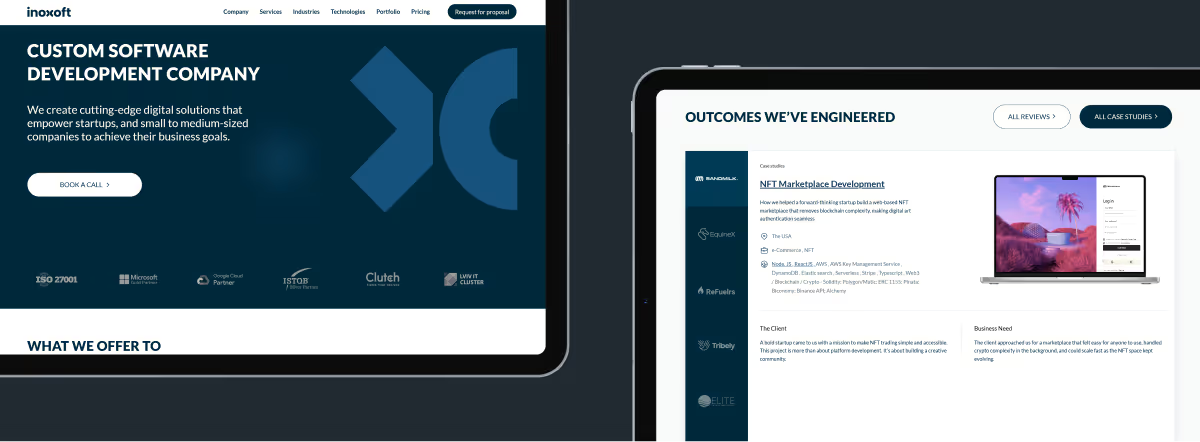
INOXOFT is a full-cycle software development company with a strong reputation for reliability and structured delivery. Known for transparent communication and mature project governance, they partner with clients across healthcare, logistics, real estate, and fintech.
Their engineering teams work in cross-functional units and maintain high QA standards — qualities often sought by companies looking to outsource software development without sacrificing predictability.
Services:
- Custom software development
- Cross-platform mobile development
- AI, ML, and data engineering
- Cloud development (AWS, Azure)
- QA automation
- Dedicated engineering teams
Core strength: Reliable, structured delivery supported by cross-functional teams with strong QA and engineering governance.
7. Vention
Founded: 2002
Location: USA
Team size: 3,000+
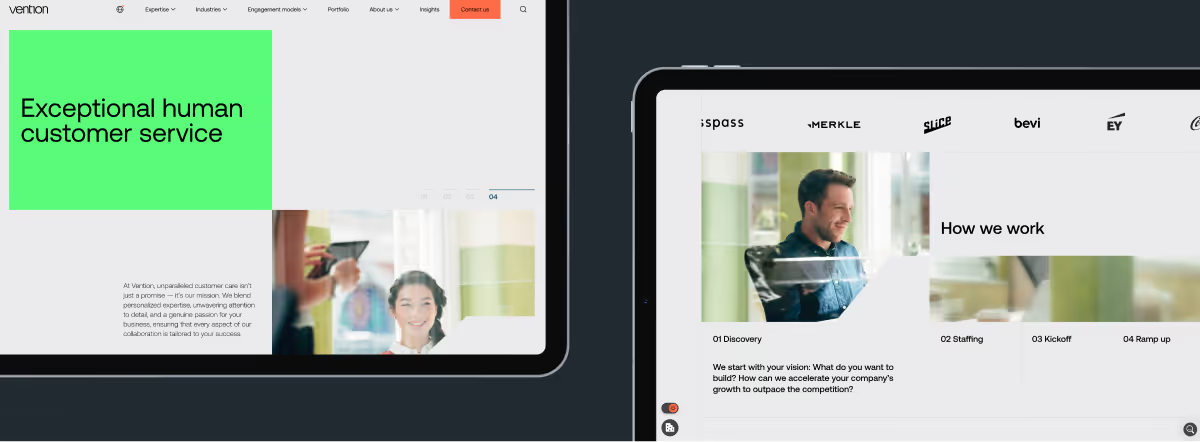
Vention is one of the largest outsourcing development companies, serving enterprises and high-growth tech organizations. Their global presence allows them to quickly scale teams to dozens or even hundreds of engineers.
Vention is known for its long-term, multi-year engagements, strong cloud and AI competence, and extensive pool of senior engineers. They also support heavy enterprise-grade projects that require strict security and compliance.
Services:
- Full-scale engineering teams
- AI/ML, data science, and cloud modernization
- Multi-platform product development
- Systems architecture & enterprise modernization
- Cybersecurity and compliance
Core strength: Large-scale engineering resources with long-term collaboration models, enterprise-level security, and rapid team scaling.
8. Coherent Solutions
Founded: 1995
Location: USA, Eastern Europe, LATAM
Team size: 2,000+
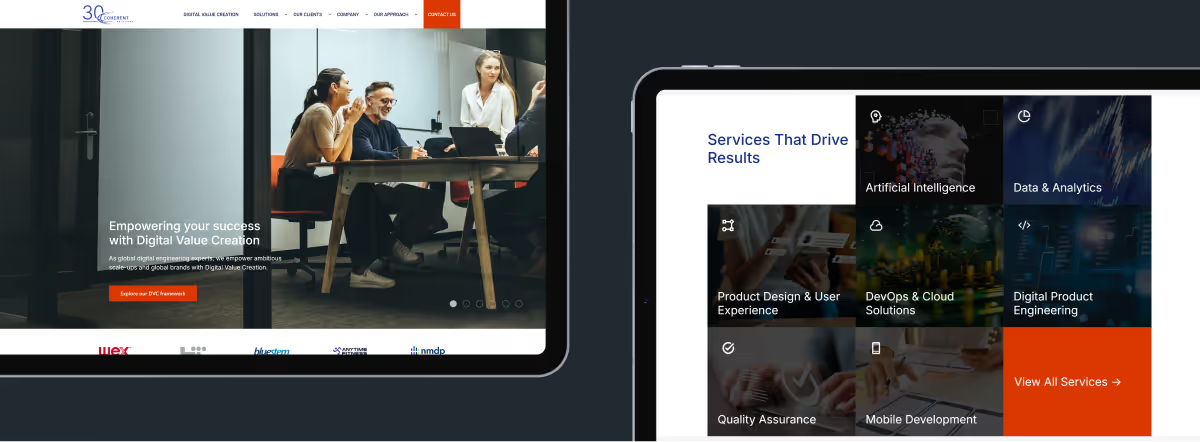
Coherent Solutions is a long-established global software development company with nearly three decades of experience delivering enterprise-grade digital products. With a hybrid U.S.–nearshore/offshore model and more than 2,000 engineers, Coherent Solutions combines strategic consulting with large-scale engineering capacity.
Their strength lies in structured engagement models, predictable delivery, and the ability to assemble cross-functional teams.
Services:
- Custom software development
- Dedicated development teams & staff augmentation
- Cloud engineering (AWS, Azure, GCP)
- AI/ML & data analytics
- E-commerce development
- DevOps, SRE & infrastructure automation
- Mobile & web development
- UI/UX design
- QA automation & performance testing
Core strength: Large cross-functional teams, predictable delivery models, and deep expertise in enterprise modernization and cloud engineering.
9. AgileEngine
Founded: 2010
Location: USA, LATAM
Team size: 1,000+ engineers
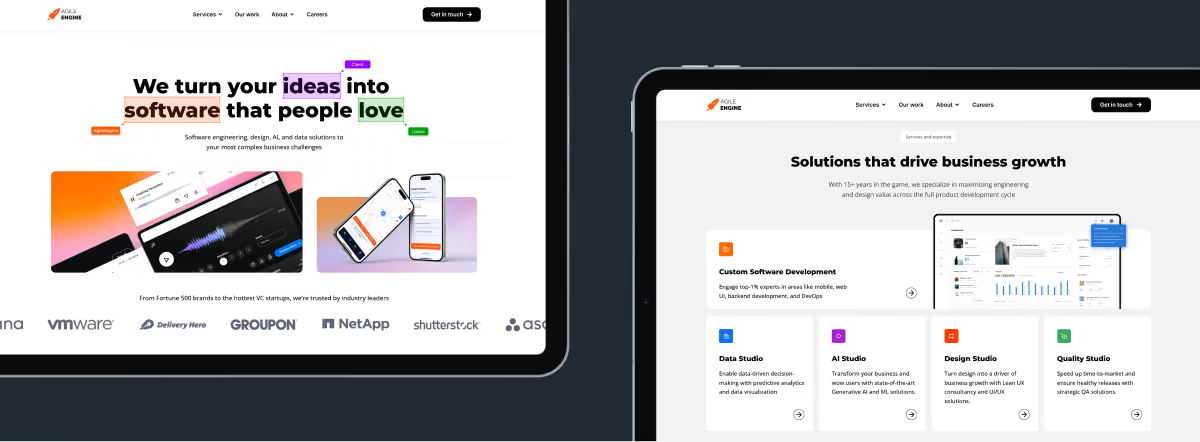
AgileEngine is one of the fastest-growing outsourcing development companies in the U.S. market, known for assembling high-performing engineering teams for enterprise and mid-market clients.
The company is recognized for its strong talent network across Latin America and Eastern Europe, giving clients access to Senior-level engineers with excellent English and cultural alignment. AgileEngine often works with VC-backed product companies, helping them scale features, modernize systems, and speed up releases.
Services:
- Dedicated engineering teams & staff augmentation
- Full-cycle custom software development
- UX/UI design
- DevOps, cloud engineering (AWS, GCP, Azure)
- Data engineering & analytics
- QA automation and performance testing
Core strength: Access to senior global talent with fast team scaling and strong alignment for product companies and enterprise environments.
10. Dualboot Partners
Founded: 2018
Location: USA, Eastern Europe
Team size: 250+

Dualboot Partners is a development and product consulting company focused on startups, SMBs, and fast-growing digital businesses. They combine product strategy with execution, making them popular among founders and business leaders who need both business insight and engineering capacity.
Dualboot operates with hybrid U.S./Eastern European teams, offering strong communication, fast iteration cycles, and competitive pricing. They’ve worked with more than 200 companies across fintech, marketplaces, and SaaS.
Services:
- Web and mobile app development
- Product strategy, discovery & roadmap planning
- UX/UI design
- SaaS development and platform engineering
- Data analytics, dashboards, and internal tools
- Team augmentation
Core strength: Blending product strategy with agile engineering — ideal companies looking to outsource software development for fast iteration, roadmap shaping, and growth-focused development.
11. Oyova
Founded: 2008
Location: USA
Team size: ~50+
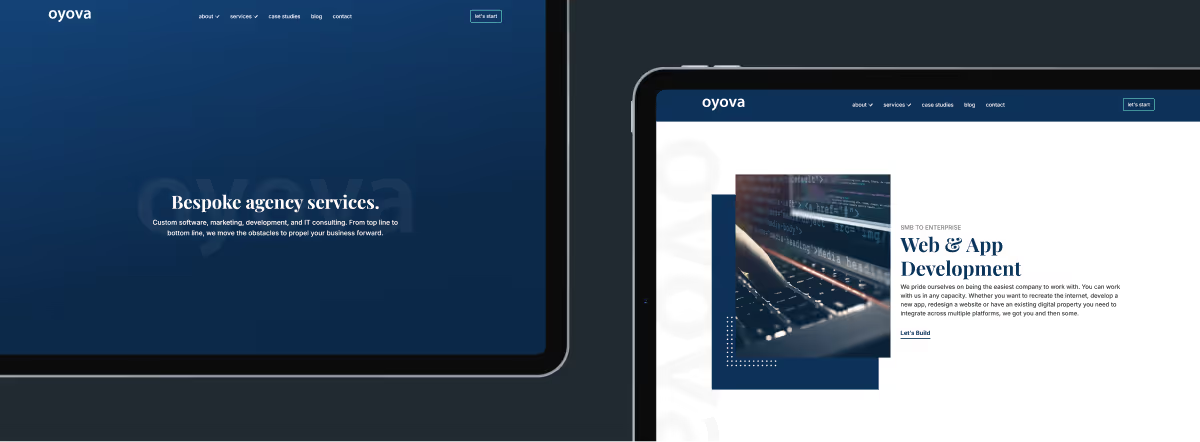
Oyova is a U.S.-based software development and digital marketing company known for combining technical engineering with strategic marketing execution. It’s a fitting option for companies that outsource software development alongside ongoing marketing or e-commerce support.
Oyova has delivered solutions across e-commerce, SaaS, education, and enterprise services. Clients appreciate Oyova for its consistent ability to translate business needs into measurable product outcomes.
Services:
- Custom web & software development
- WordPress, Shopify, Magento development
- API integrations & system architecture
- UI/UX design
- E-commerce development
- Digital marketing (SEO, content, PPC)
- Website optimization, support & maintenance
- Branding & creative strategy
Core strength: Combining software development with digital marketing and e-commerce expertise to deliver both product and growth initiatives.
How to Choose the Right Outsourcing Company
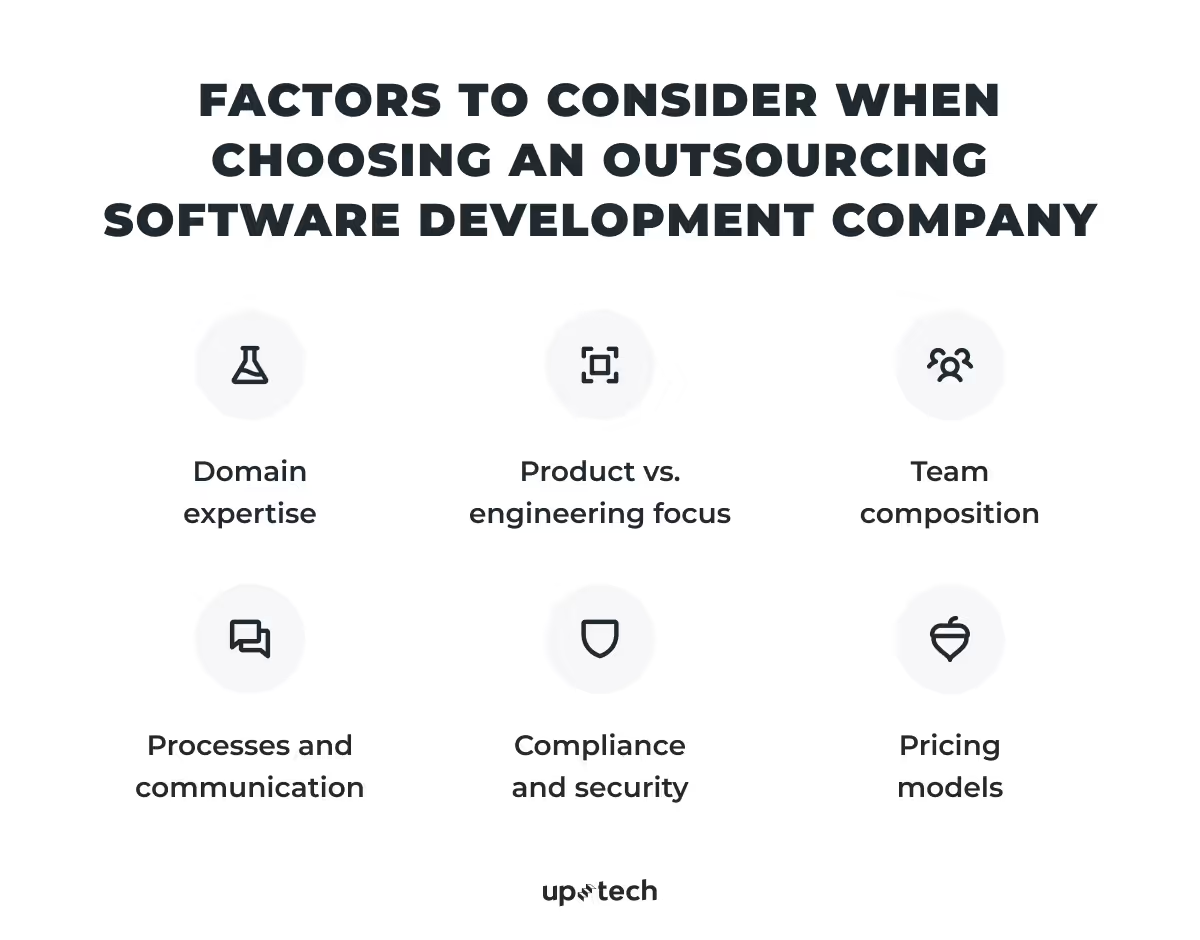
Choosing among outsourced software development companies is more than just about comparing rates or checking locations. You need to find a partner that fits your vision, understands your market, and can consistently deliver results. Here’s what to evaluate before making a decision.
Domain expertise
Not all outsource development companies bring the same level of domain knowledge, and this becomes obvious as soon as real development begins.
A vendor with experience in your industry will always deliver faster and more accurately than a generalist team. Check whether they have worked with your domain and its specific requirements.
What to look for:
- Relevant case studies, not generic portfolios. Ask whether they’ve built products with similar workflows, compliance requirements, or user personas. For example, healthcare vendors should confidently talk about HIPAA, PHI handling, or FHIR integrations without you prompting them.
- Teams that understand the business logic, not just the tech stack. Engineers who already know specific flows of your industry, like claims processing, KYC/AML, subscription billing, or clinical scheduling, will shape better product decisions early on.
- Awareness of industry-specific risks. Experienced software development outsourcing companies anticipate issues like scalability peaks in fintech, double-booking logic in appointment apps, or latency requirements in telehealth calls — before they become blockers.
- Shorter ramp-up time and faster discovery. A domain-savvy team can jump straight into refining requirements, validating assumptions with real user patterns, and planning architecture aligned with market standards.
- Built-in compliance mindset. In regulated industries, the best vendors embed compliance checks into design and development (HIPAA, GDPR, PCI-DSS), so you don’t have to retroactively fix gaps later.
Domain expertise significantly reduces the risk of building the wrong workflows, missing critical industry requirements, or overlooking compliance constraints that may surface too late. It shortens product discovery, minimizes back-and-forth, ensures more accurate estimates, and leads to more predictable delivery.
Most importantly, it helps avoid costly mistakes early on — from misinterpreting regulatory requirements to designing workflows that don’t match how the industry actually operates — resulting in a smoother, safer delivery pipeline.
Product vs. engineering focus
Not all software development outsourcing companies operate with the same philosophy, and this difference becomes very visible once the project starts. Understanding whether you need a product-first partner or an engineering-first partner is important for avoiding misalignment, scope creep, or solutions that “work” technically but fail with real users.
Engineering-focused vendors
These teams shine when you already have a clear product vision, detailed requirements, and a mature roadmap. Their strengths include:
- Clean, scalable code
- Strong architectural decisions
- Ability to quickly ramp up engineering capacity
- Predictable execution on well-defined tasks
Essentially, they perform best when you say, “Here is exactly what to build.”
Product-oriented vendors
These teams are valuable when you’re still shaping the idea or need help answering:
What exactly should we build, for whom, and why?
A product-first company will support you with:
- Discovery workshops and problem framing
- Competitive and user research
- UX/UI design and user flows
- Feature prioritization and scope clarification
- Early validation through prototypes or MVPs
They challenge assumptions, help avoid overbuilding, and ensure the product resonates with real users — not just meets technical specs.
Choosing the wrong type of vendor often leads to miscommunication, unclear ownership, slow progress in early phases, and features built without understanding the end user. A company’s product vs. engineering culture will directly shape how your project evolves from idea to reality.
Team composition
Even the best vendor on paper can fail if the actual team assigned to your project isn’t equipped to deliver. Portfolio examples won’t help you if your day-to-day team lacks seniority, stability, or the roles needed for real product development.
Before signing, make sure the vendor can provide a team setup that covers all the necessary roles with the right level of expertise for each.
You don’t need to assess individual engineers, but you should confirm that the team composition is balanced, scalable, and flexible enough to support your product from early discovery through ongoing development.
Key questions to ask vendors:
- Is the team dedicated or rotating between projects? Dedicated teamsmaintain context, make fewer mistakes, and deliver faster. Rotating teams leads to knowledge loss, rework, and inconsistent velocity.
- What’s the seniority mix? A strong team isn’t junior-heavy, but it doesn’t need to be all-senior either. Seniors set the app architecture and technical direction, while many routine features can be handled by mid-level or junior developers under guidance. The right balance keeps quality high without inflating costs.
- Can you scale or adjust the team easily? Good outsource software development companies provide flexibility: adding a QA before release, bringing a DevOps for CI/CD setup, or involving a data specialist when AI features emerge.
Team composition determines quality, velocity, predictability, and ultimately product success. A well-balanced, stable team can uncover risks early, plan more accurately, and handle complexity without derailing timelines.
Processes and communication
Great communication prevents delays, rewrites, and misalignment. When a vendor misunderstands a workflow, you may receive a feature that technically works but breaks the business process. If requirements aren’t clarified early, teams often build screens or APIs that need to be redesigned from scratch once real expectations surface.
And when blockers aren’t raised quickly, a two-day issue can quietly turn into a two-week delay. Clear communication keeps all of this visible and manageable before it becomes costly.
Look for outsourcing software development companies that provide:
- Weekly demos or sprint reviews — so you can see progress early, validate direction, and catch misunderstandings before they turn into rework.
- Clear documentation and decision logs — to ensure agreements don’t get lost and the entire team stays aligned on what’s been decided and why.
- Transparent progress tracking (Jira, Linear, Monday) — to give you real-time visibility into priorities, blockers, and delivery pace.
- A dedicated communication channel (Slack, Teams) — to allow quick clarifications and prevent delays caused by unanswered questions or scattered messages.
- Predictable delivery cadence — to help you plan releases, manage stakeholders, and maintain momentum without surprises.
Clear processes reduce uncertainty. Transparent communication helps you make faster decisions. Together, they ensure that what gets delivered is exactly what the business needs without unnecessary friction or rework.
Compliance and security
If your product involves sensitive data: healthcare records, financial information, personal identifiers, or enterprise workflows, compliance is not a checkbox. It fundamentally shapes how the system is designed, built, and maintained.
A vendor without compliance experience may unintentionally introduce gaps in privacy controls, consent management, or data-handling flows — issues that can halt product launches or make integrations with enterprise partners impossible.
Strong outsource software development companies treat compliance as part of the product foundation, not an afterthought.
What the vendor should understand
- HIPAA — handling PHI, access controls, audit logging, encryption standards, and breach-response workflows for U.S. healthcare.
- GDPR — data minimization, explicit consent, retention policies, right-to-delete workflows, and secure international data transfers.
- PCI-DSS — secure payment processing, vaulting technologies, tokenization, and mandated audit requirements.
- SOC 2 — structured security controls across availability, confidentiality, integrity, and change management (crucial for enterprise SaaS).
What to ask the vendor:
- Have you built compliant products before? Look for specific examples — vague statements are red flags.
- Do you conduct internal or external security audits? Reliable outsource development companies run regular penetration tests, dependency scans, and infrastructure reviews.
- How do you build security into the development lifecycle? Ask about access policies, code review standards, secret management, and incident response.
- Who on your team owns compliance? Mature vendors have a dedicated compliance lead, security engineer, or at least a structured process.
Compliance mistakes can lead to data breaches, legal penalties, blocked enterprise deals, and product shutdowns. A vendor with real compliance experience reduces risk dramatically and ensures your product is enterprise-ready from day one.
Pricing models
Choosing the right pricing model determines how much flexibility you have during development, how risk is distributed between you and the vendor, and how well the team can respond to changes. Match the model to your project’s maturity and level of uncertainty.
Fixed price
Best for small, well-defined scopes where the requirements are stable and unlikely to change. The vendor commits to delivering a specific outcome for a preset cost.
Pros: predictable budget, clear scope, lower risk for the client.
Cons: limited flexibility, and vendors often add buffers to cover uncertainty.
Choose it when you know exactly what needs to be built.
Time & materials (T&M)
Ideal for evolving or unclear requirements, early-stage products, or ongoing improvements. You pay for actual work performed.
Pros: maximum flexibility, fast iteration, and easier prioritization.
Cons: less predictable monthly cost unless capped or scoped in sprints.
Use it when discovery is still happening or when the product is evolving.
Dedicated team
A long-term model where you get a team working exclusively on your product. Perfect for companies building or scaling products over months or years.
Pros: deep product knowledge, stable velocity, predictable monthly cost, seamless scaling.
Cons: requires a consistent workload and active product ownership from your side.
Opt for a dedicated development team when you need a reliable, long-term extension of your in-house team.
Hybrid models
A balanced approach combining T&M, fixed-fee phases, or dedicated-team elements. Common in more mature organizations that need predictability + flexibility.
Examples:
- fixed-price discovery → T&M development
- dedicated team with a capped monthly budget
- fixed-price MVP → T&M continuous improvement
Choosing the wrong pricing model can lead to scope conflicts, delays, unnecessary costs, or rigid processes that slow down delivery. The right model aligns incentives, improves collaboration, and supports the natural evolution of your product.

Conclusion
The outsourcing landscape is crowded, but choosing the right partner doesn’t have to be guesswork. When you focus on the fundamentals: domain expertise, product vs. engineering culture, team composition, communication practices, compliance, and pricing models, you’re far more likely to find a vendor who can deliver real, measurable results.
If you’re searching for a dependable development partner with a strong product mindset, our team would be glad to talk.
Contact us to book a free call and explore how we can help.

























.avif)