In 2026, blockchain projects will be judged by whether they can run safely in production, meet regulatory requirements, and scale without breaking.
The market is still growing, with more capital moving into real, production-grade blockchain systems. The global blockchain market is projected to reach USD 393.45 billion by 2030, driven by enterprise adoption, tokenized assets, and regulated financial use cases.
But the risks have grown just as fast — and security remains existential. In 2025, several high-profile breaches exposed how fragile poorly designed systems can be. One of the most notable cases was the Bybit hack, where attackers drained roughly $1.5 billion after exploiting infrastructure and security weaknesses. The incident reinforced a hard truth: a single architectural or security failure can wipe out years of progress overnight.
At the same time, regulation is no longer optional. With MiCA now fully in force, compliance directly affects how blockchain systems are designed, governed, and upgraded from day one, especially for projects involving tokens, custody, or financial flows.
This is why selecting the right partner among blockchain development companies is so important. A strong partner challenges early assumptions, designs for security and upgradeability, and helps teams avoid costly mistakes that only surface after launch.
Below, we’ve gathered a shortlist of the best blockchain development companies to consider in 2026, along with guidance to help you choose the right one for long-term success.
Let’s get started.
Top Blockchain Development Companies
1. Uptech
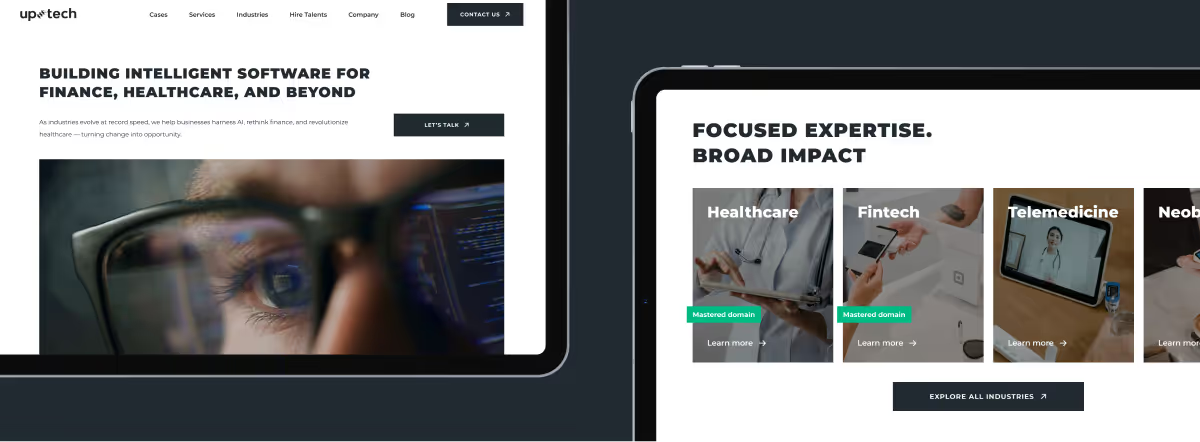
Uptech is a product-driven software development company with expertise in blockchain, fintech, healthcare, and other regulated industries where reliability, security, and compliance are non-negotiable. In these high-stakes environments, clients rely on our ISO-certified workflows and mature engineering practices to move fast without compromising quality.
We work with companies across the US and Europe, supporting products from early validation through long-term scaling. Over the past 10 years, our team has delivered 200+ digital products across 8 countries, with a strong focus on predictable delivery, transparent communication, and measurable outcomes.

We also build our own products — 10 to date — which gives us a founder’s perspective on early decisions, technical debt, and long-term product evolution.
We don’t treat Web3 as an experiment but build it into a real, production-ready system designed to last. Our engagements often go far beyond blockchain itself. We also design and build crypto wallets, neobanks, and full-scale fintech platforms, integrating blockchain with core financial infrastructure, APIs, and user-facing applications when it makes business sense.
Key services:
- Blockchain and crypto development services
- Smart contracts and security
- Token systems (utility and governance)
- Custodial and non-custodial wallets
- NFT platforms and marketplaces
- Backend and off-chain infrastructure
- Security, monitoring and production support
Core strength:
Building blockchain solutions that combine a solid engineering discipline with strong product thinking.
2. SpaceDev

SpaceDev is a Latin America–based software development company with a strong Web3 and emerging-tech focus. It positions itself as a long-term delivery partner, often embedding blockchain into larger digital ecosystems. The company is known for structured project execution and cross-functional teams.
Key services:
- Blockchain architecture and development
- Team augmentation for blockchain initiatives
- Smart contract and blockchain security
Core strength:
Deep engineering capability to architect, develop, deploy, and maintain both traditional and decentralized software systems.
3. RedDuck
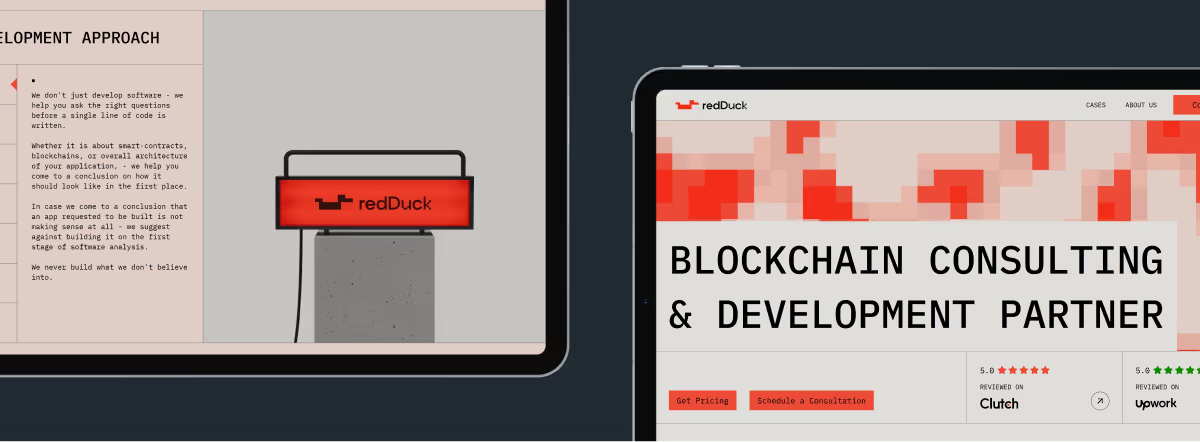
RedDuck is a blockchain consulting and development studio focused on EVM-compatible blockchains and smart contracts. The team operates globally and works closely with crypto-native founders. Its market position centers on lean execution and technically opinionated architecture decisions.
Key services:
- Smart contracts on EVM chains
- Full-stack development for Web3 projects
- Technical consulting for Web3 startups
Core strength:
Deep EVM-level expertise paired with fast, technically rigorous delivery.
4. 4soft
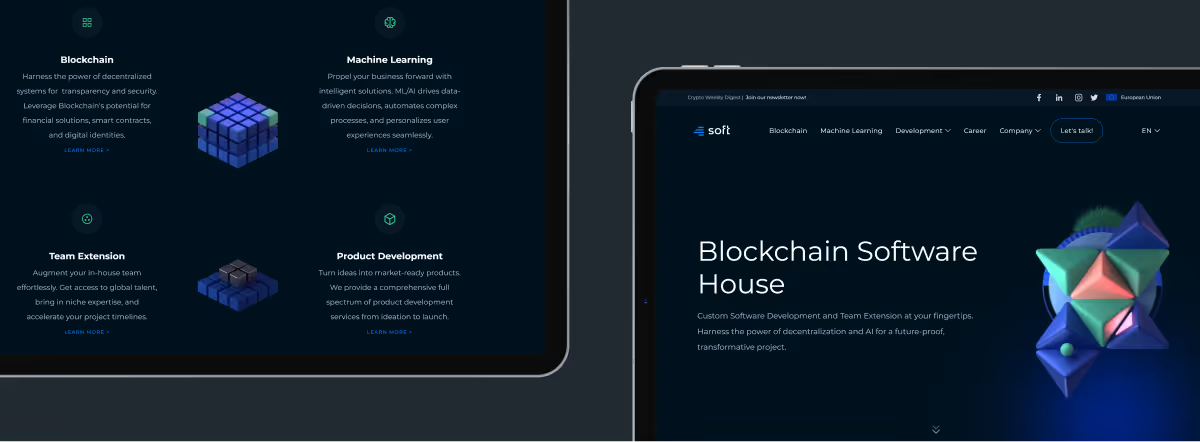
4soft is a software development firm offering blockchain as a core competency. The company serves clients building transactional, trading, and data-intensive blockchain systems. Its positioning leans toward reliability and structured engineering over hype-driven innovation.
Key services:
- Blockchain application development
- DEX, CEX and trading platforms
- Non-fungible token development
Core strength:
Engineering robust, transaction-heavy blockchain systems with predictable delivery.
5. Tech Alchemy
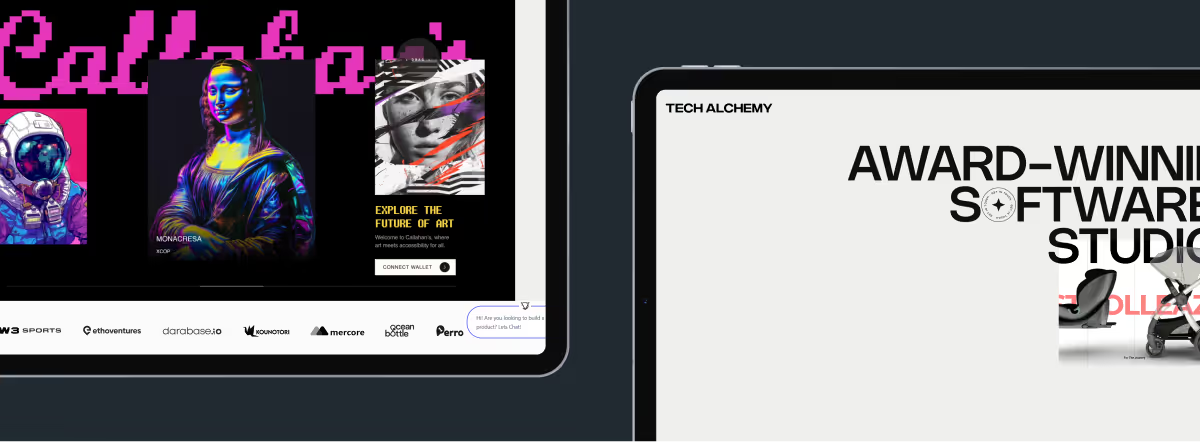
Tech Alchemy is a UK-based blockchain agency known for product-centric delivery and close client collaboration. The company works with startups and scale-ups looking to commercialize blockchain ideas quickly. It emphasizes clear communication and iterative development cycles.
Key services:
- Blockchain development
- Smart contract audits
- NFT development solutions
Core strength:
They deliver startup-ready digital products built around speed, usability, and investor readiness.
6. Technorely Inc.
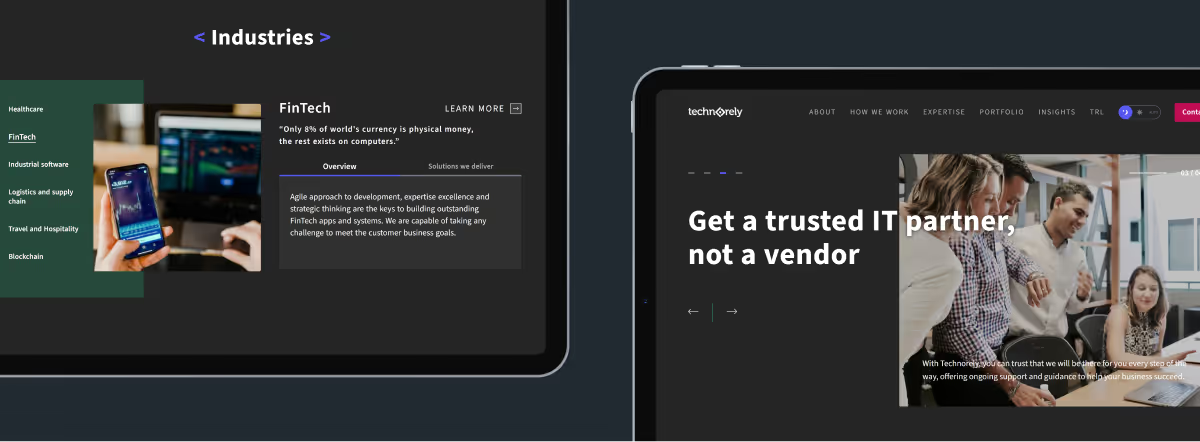
Technorely is an international custom software development company with blockchain as part of a wider engineering portfolio. It serves clients that require blockchain integration alongside traditional enterprise systems. The company positions itself as a delivery-focused partner.
Key services:
- Blockchain and decentralized applications
- Smart contracts and token logic
- System integration and backend engineering
Core strength:
Integrating blockchain into complex, multi-system environments without overengineering.
7. Artiffine
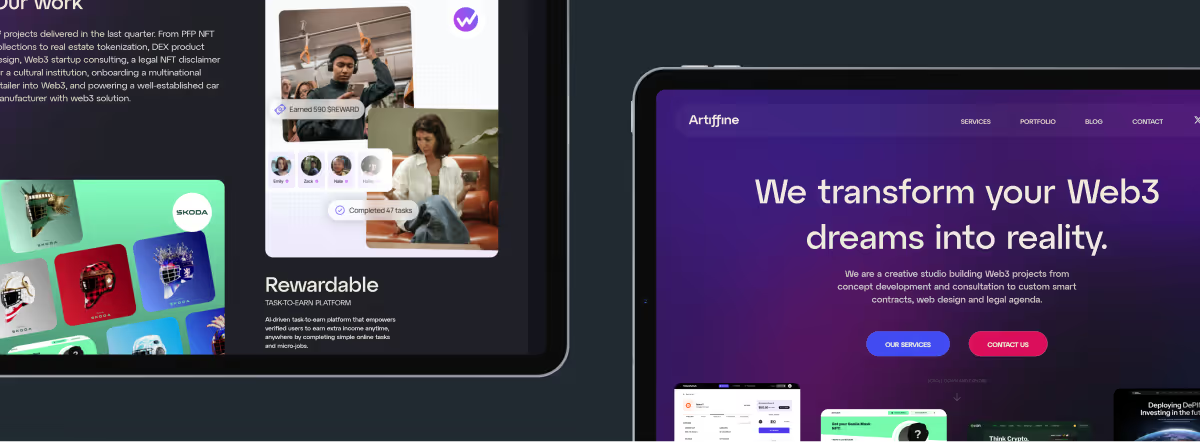
Artiffine is a creative Web3 studio and full-stack blockchain partner that helps brands, creators, and startups bring their decentralized projects to life — from early concept and strategy to design, development, legal compliance, and launch.
Key services:
- Web3 strategy & concept development
- Custom smart contract and blockchain engineering
- Full-stack web & app development
Core strength:
Reducing legal, reputational, and go-to-market risk for Web3 initiatives.
8. Labrys
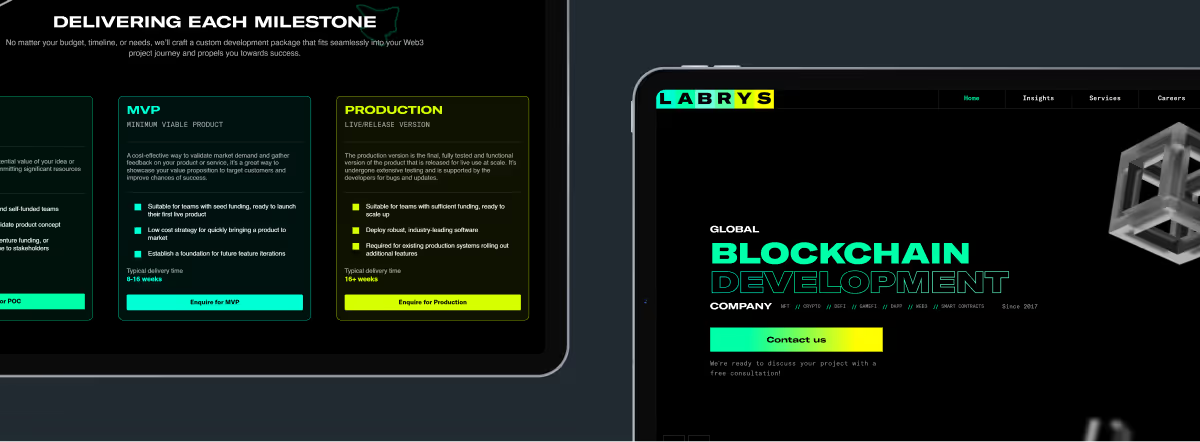
Labrys is an Australia-based blockchain development company that helps companies design, build, and launch secure decentralized products. They work internationally with product teams and organizations that need to move fast or lack in-house Web3 expertise, providing end-to-end support across dApps, smart contracts, DeFi, tokenization, and enterprise blockchain solutions.
Key services:
- Blockchain development
- On-chain integrations
- Technical consulting
Core strength:
Disciplined execution of Web3 projects under real delivery constraints.
9. Dexola
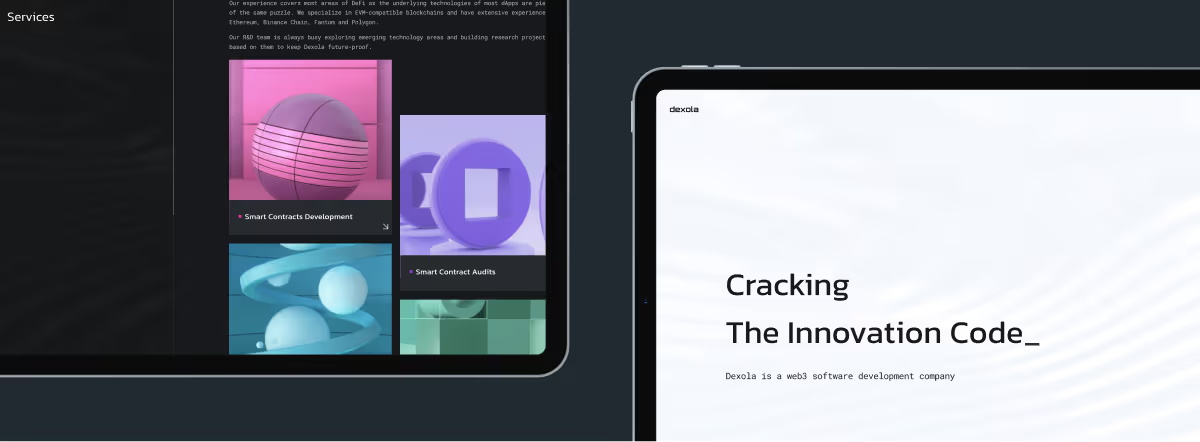
Dexola is a Web3-focused development company operating as part of a larger digital product ecosystem. It works primarily with startups building blockchain-enabled platforms. The company’s positioning highlights pragmatic delivery and alignment with traditional product development practices.
Key services:
- Blockchain development
- Smart contracts and token systems
- White-label Web3 solutions
Core strength:
Making blockchain operationally practical for non-crypto-native businesses.
10. Cyberk
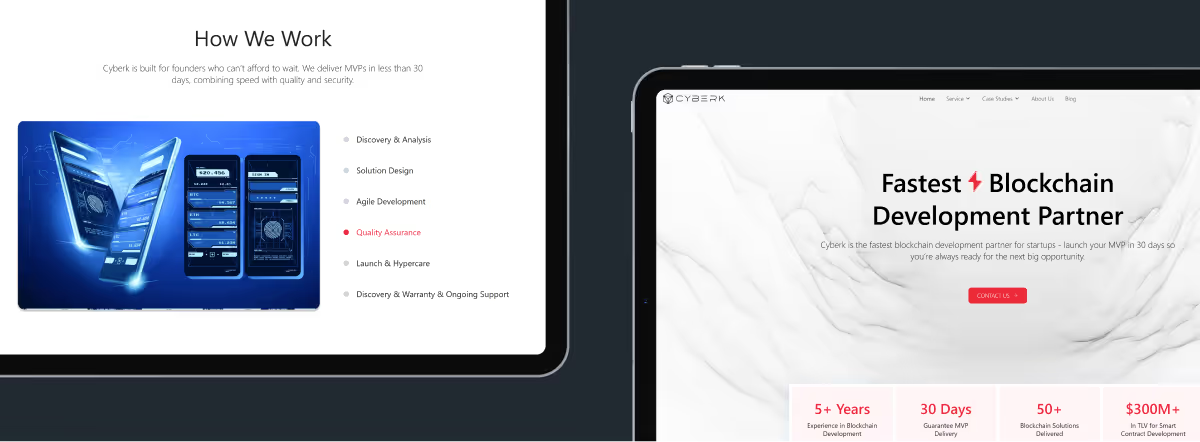
Cyberk is a Web3 development partner oriented toward rapid execution and early validation. The company targets founders who need to test blockchain ideas quickly before scaling. Its market position is centered on speed and lean delivery.
Key services:
- Blockchain MVP development
- Smart contract implementation
- Prototype and proof-of-concept builds
Core strength:
Fast time-to-market for early-stage blockchain concepts.
11. Cowchain
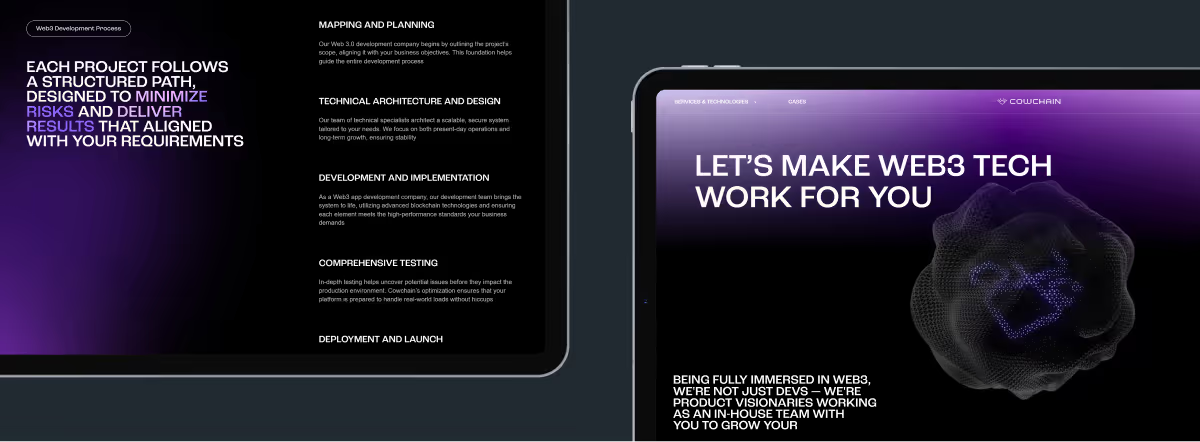
Cowchain is a Web3 development company delivering decentralized applications and smart contracts for global clients. It positions itself as a full-cycle blockchain partner rather than a niche specialist. The team focuses on practical implementation over experimental research.
Key services:
- Web3 full-stack development
- Blockchain consulting
- dApp development
Core strength:
Balanced full-stack Web3 execution without excessive architectural complexity.
12. Blockstars Technology

Blockstars Technology is an Australia-based development studio working across blockchain and AI. The company positions itself at the intersection of decentralized systems and advanced data technologies. It often supports innovation-driven and experimental products.
Key services:
- Blockchain application development
- AI-enhanced Web3 solutions
- Full-stack digital products
Core strength:
Combining blockchain with AI-driven capabilities for next-generation products.
13. LimeChain
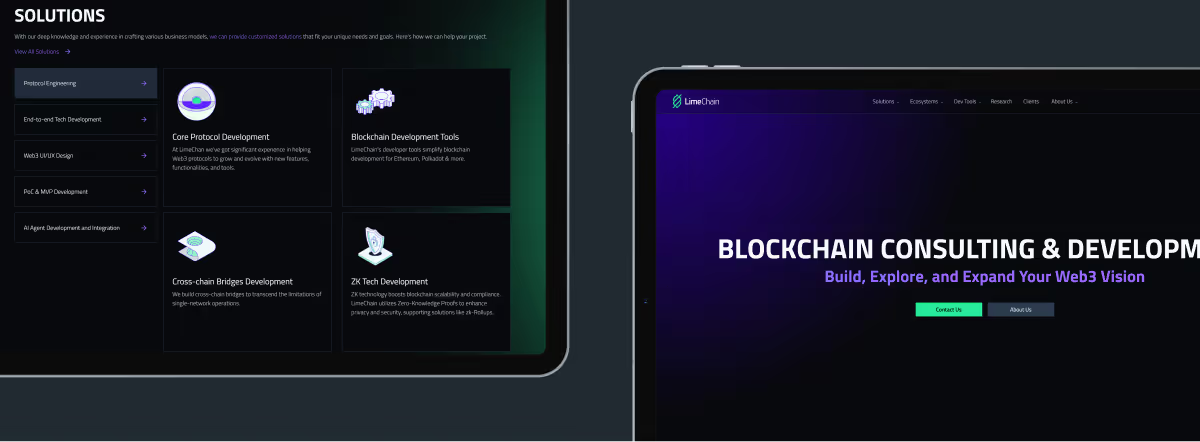
LimeChain is a blockchain engineering company with a strong focus on infrastructure and ecosystem tooling. It works closely with protocols, foundations, and developer platforms. The company is well known for contributing beyond client work to public Web3 infrastructure.
Key services:
- Blockchain infrastructure and protocol development
- Smart contracts and dApps
- Developer tools, SDKs, and ecosystem support
Core strength:
Deep infrastructure-level blockchain engineering and ecosystem thinking.
Key Factors for Choosing a Blockchain Development Company
Choosing a blockchain development company has long-term consequences. Early technical decisions affect security, compliance, operating costs, and the ability to evolve the system later. These criteria help tell production-ready blockchain teams from prototype builders.
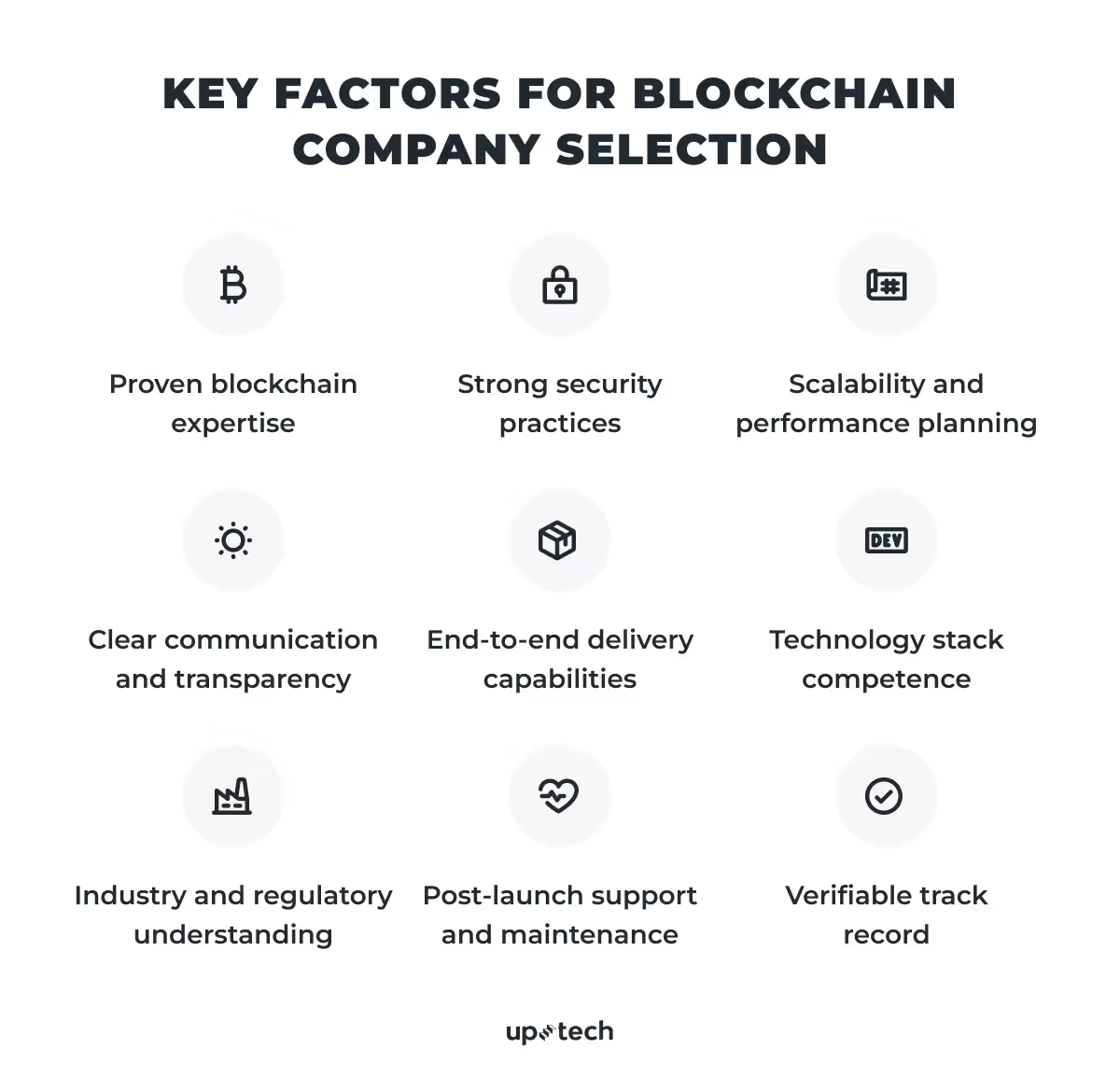
Proven blockchain expertise
Blockchain expertise is not measured by the number of chains a team can name or the volume of smart contracts deployed. It shows in a partner’s ability to reason about protocol-level trade-offs: consensus mechanisms, finality assumptions, transaction economics, and failure modes across different networks.
A strong blockchain team understands when to use public infrastructure, when permissioned or hybrid models are more appropriate, and how design choices affect cost, security, and operational complexity over time. They can explain these decisions clearly and defend them based on the realities of production use, not trends.
Strong security practices
In production blockchain systems, security is never cosmetic. Mature teams design for security before writing code — defining trust boundaries, minimizing attack surfaces, and assuming adversarial behavior from day one.
This includes disciplined smart contract standards, internal threat modeling, structured reviews, and clear audit readiness. Just as critical, security is treated as an ongoing operational concern. Monitoring, incident response, and upgrade strategies are planned early, not bolted on after deployment. Teams that view security as a checklist step tend to learn hard lessons only after something breaks.
Scalability and performance planning
Scalability is not solved by choosing a “fast” chain. It requires deliberate planning around transaction volume, latency tolerance, data availability, and off-chain coordination.
Production-ready partners design systems that remain usable and economically viable as usage grows — accounting for fee volatility, congestion, and real user behavior. This often means hybrid architectures, Layer 2 solutions, batching strategies, and a careful separation of on-chain and off-chain responsibilities. Teams that skip this thinking usually discover their limits only once users arrive.
Clear communication and transparency
Blockchain projects involve complex decisions with long-term consequences. Clear communication is not a soft skill — it’s a risk-control mechanism.
Strong partners make architectural choices explicit, document assumptions, and explain trade-offs in practical terms. They provide predictable delivery processes, realistic timelines, and transparent cost structures. This clarity allows stakeholders to make informed decisions early, instead of uncovering constraints months after launch when change becomes expensive.
End-to-end delivery capabilities
In production, blockchain rarely exists in isolation. It must integrate with backend services, identity and access management, payment infrastructure, analytics, and user-facing applications.
Capable blockchain development companies can take responsibility across the full lifecycle — discovery, architecture, development, testing, deployment, and ongoing operation. This reduces fragmentation, ensures architectural consistency, and avoids gaps where critical responsibilities fall between vendors.
Technology stack competence
Blockchain systems rely on a broader technology stack than smart contracts alone. Off-chain services, APIs, data pipelines, monitoring tools, and frontend applications are equally critical to system reliability.
A strong partner demonstrates competence across this stack and understands how blockchain components interact with traditional infrastructure. This includes appropriate language and framework choices, secure key management, and operational tooling that supports observability and maintenance in real environments.
Industry and regulatory understanding
With frameworks like MiCA now active, regulation directly shapes blockchain architecture — especially for tokens, custody, payments, and user data.
Experienced partners understand how regulatory constraints translate into technical requirements: governance models, upgrade mechanisms, data handling, and operational controls. This alignment from day one reduces the risk of costly redesigns or compliance dead ends once scrutiny increases.
Post-launch support and maintenance
Launching a blockchain system is the beginning, not the end. Production systems require monitoring, upgrades, incident response, and ongoing optimization.
Reliable blockchain technology development companies plan for this reality early, defining support models, upgrade paths, and operational responsibilities. They design systems that can evolve safely over time, rather than locking clients into brittle deployments that are difficult or dangerous to modify after launch.
Verifiable track record
Finally, claims matter less than evidence. Mature blockchain partners can point to systems that are live, in use, and maintained over time.
Verifiable case studies, long-term client relationships, and references that confirm real production experience are strong signals of maturity. Teams that have operated real systems understand challenges that never appear in demos — and design accordingly.
Conclusion
Choosing a blockchain development company is ultimately about reducing long-term risk. In 2026, the biggest failures in blockchain are no longer caused by missing features, but by weak assumptions, fragile architectures, unclear governance, and security decisions that don’t hold up in production.
The right partner among blockchain development firms helps you make fewer irreversible mistakes early. They question whether blockchain is needed, design systems that can evolve, treat security and economics as core concerns, and plan for real-world operation.
Blockchain rewards teams that think in systems, not shortcuts. Taking the time to evaluate partners against these factors increases the chances that what you build will still work, scale, and comply long after the first version goes live.

























.avif)