Most people know that feedback is important. It helps us see ourselves from other people's perspectives, identify which skills to work on, and receive recognition for what we did well and what we can improve.
According to Gallup, employees who get frequent feedback are up to 3.6× more likely to be engaged at work than those who don’t.
But when it comes to the practical process of actually giving or receiving feedback , it’s not that easy. Feedback given in the wrong way can demoralize or hurt other people. Even though it was done with the best intentions in mind. Especially when the feedback comes from the leader in a work context.
My name is Andrii, I’m a co-founder of Uptech. While everyone gives and receives feedback throughout life, in recent years I’ve focused on something more specific: how to embed feedback into day-to-day work in a way that measurably improves execution and team dynamics, rather than creating tension or disengagement.
Here, I would give recommendations on how to share feedback the right way.
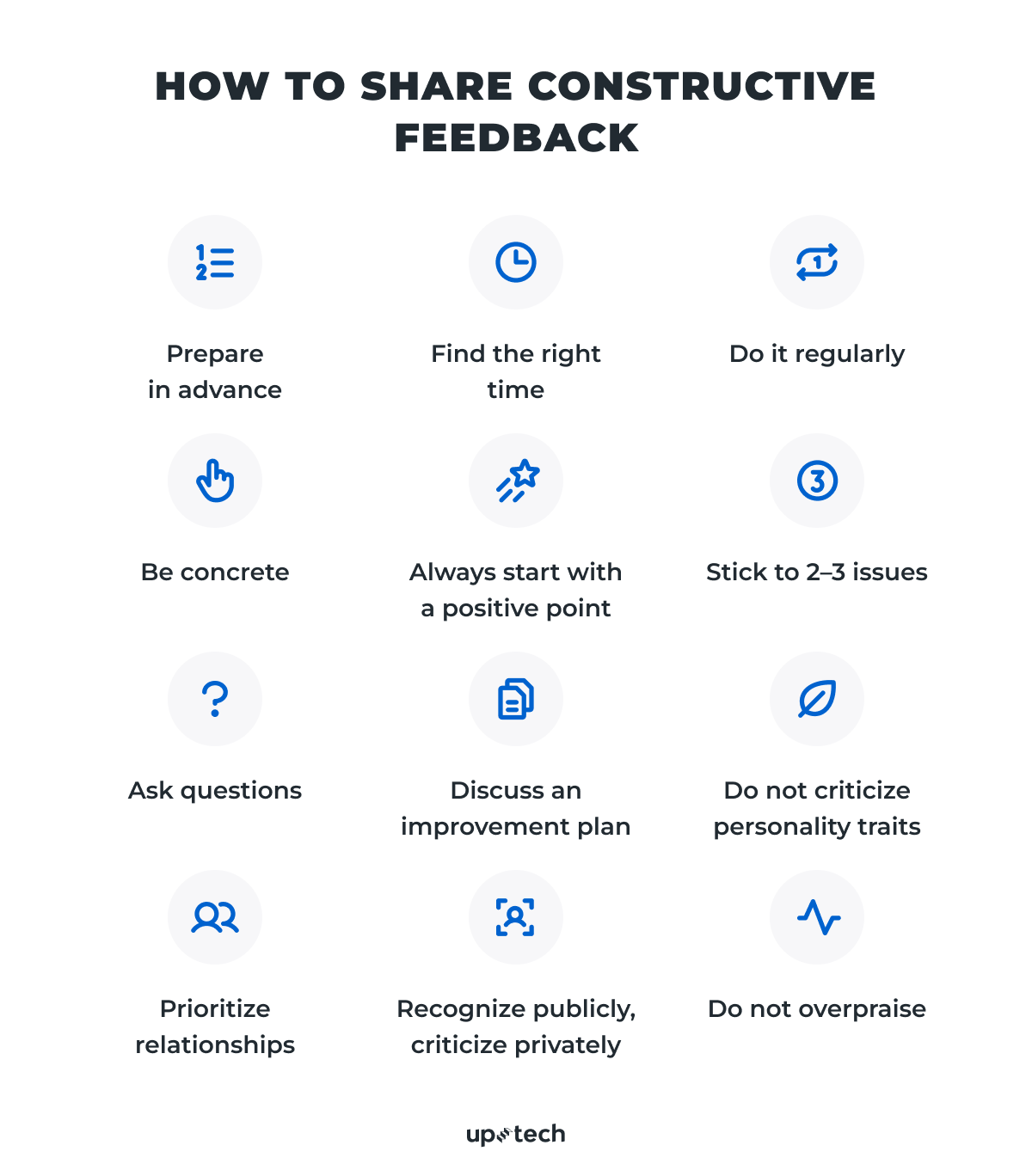
1. Prepare in advance
Before the conversation, take time to reflect on why you’re giving this feedback. Ask yourself what you want to change or reinforce, and what outcome you expect from the discussion. Good preparation helps you separate facts from assumptions and keeps the feedback grounded in reality rather than emotion.
It’s useful to write down a few key points:
- The specific situation or behavior you want to address
- The impact it had on the team, the project, or the result
- What you would like to see done differently (or repeated) in the future
Do not rely on your memory and do not improvise. Be clear about what you’re going to say. When emotions run high, you’d prefer sticking to your script.

This doesn’t mean scripting every sentence. It means knowing your main message and your boundaries. Preparation helps you avoid piling on unrelated issues, drifting into personal judgments, or over-explaining out of nervousness.
Drafting your feedback in advance also gives you a chance to check the tone. If it sounds harsh or vague on paper, it will sound worse out loud. Adjusting it beforehand ensures the message is respectful, clear, and fair.
These notes will make you feel more confident during the conversation and allow you to deliver feedback calmly and deliberately, even in difficult situations.
2. Time matters
Feedback loses value the longer you wait. When it’s shared close to the actual event, people still remember the context, their intent, and the constraints they were working under.
Timely feedback is also easier to accept. When people understand what you’re referring to and why it matters, they’re far less likely to become defensive. In contrast, bringing up situations from months ago often feels unfair, confusing, or even manipulative, especially if the person had no signal that anything was wrong at the time.
That said, “as soon as possible” doesn’t always mean “immediately.”
If emotions are running high, yours or theirs, it’s better to pause. Feedback delivered in the heat of the moment often turns into blame, not guidance. Give yourself enough time to cool down, clarify your thoughts, and separate the issue from the emotion behind it.
A good rule of thumb:
- Act fast when the situation is clear, and emotions are low
- Wait briefly when the situation is emotionally charged — but don’t wait so long that the feedback loses relevance
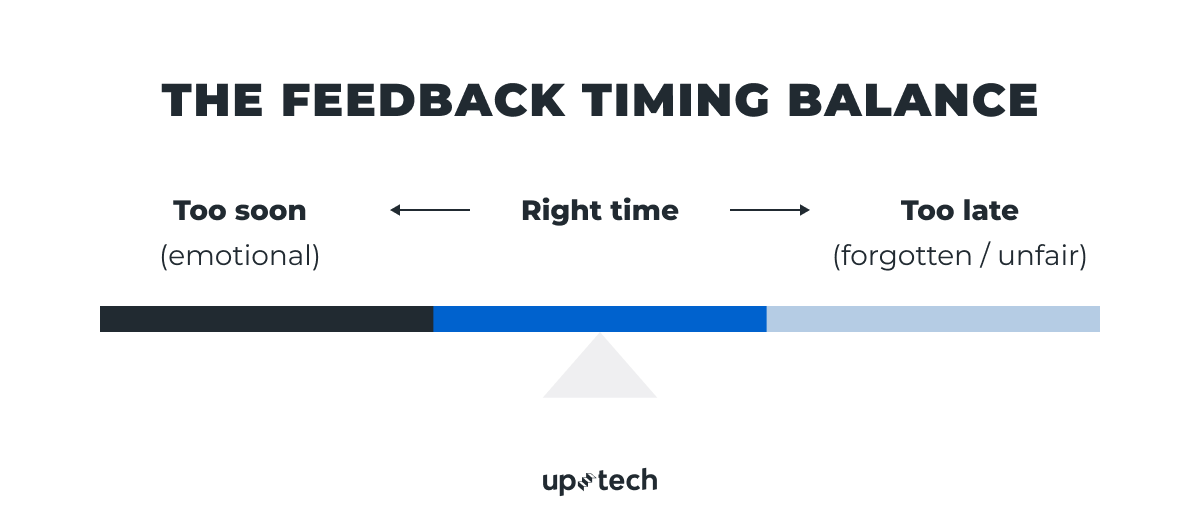
The goal is to find the balance between urgency and emotional readiness. When timing is right, feedback feels less like criticism and more like support, which is exactly how it should work.
3. Do it regularly
There’s no point in waiting until the end of the week, month, or even a year to tell your colleagues what you think about them. Develop the habit of doing it as often as you can. If you have something new to say every day — great, do it!
Regular feedback creates a sense of continuity. When people hear small signals often, they don’t panic when something needs correction. It feels normal, expected, and fair — not like a verdict. This is especially important in fast-moving teams, where small misalignments can quickly turn into bigger problems if left unaddressed.
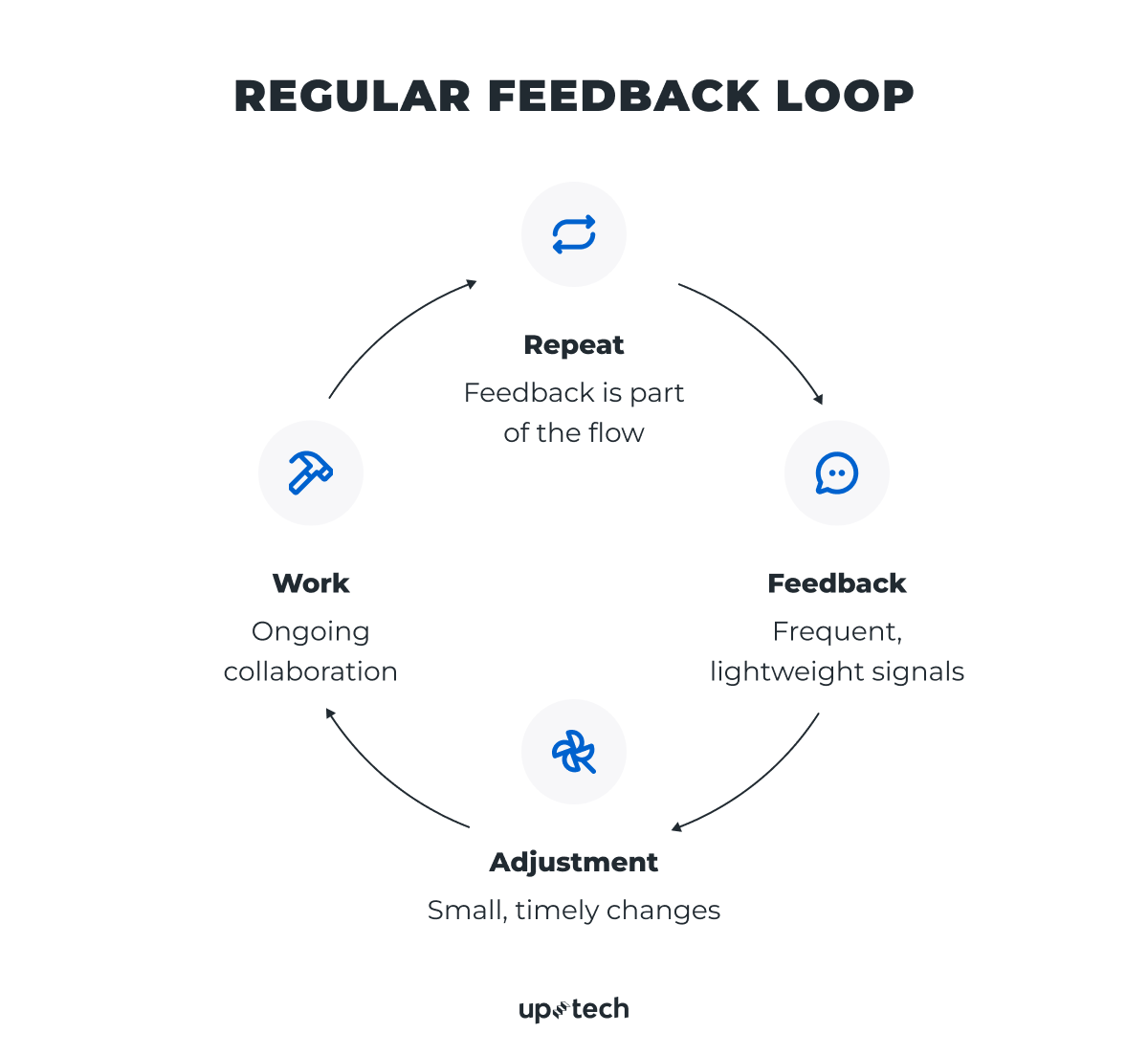
However, regular doesn’t necessarily mean constant criticism. Positive feedback, quick acknowledgments, and small course corrections all count. A short “this worked well” or “next time, let’s try X” can be far more effective than a long conversation weeks later.
The goal is to normalize feedback as part of collaboration, not as a special event. If you want to make this a team or company-wide habit, here’s an article where I explain how we implemented regular feedback across the organization and what helped it stick.
4. Be concrete
Discuss specific characteristics or actions. Do not generalize. It helps remember the point and act on it if needed.
Bad: “You’re bad at deadlines.”
Good: “In the last month, three deliverables were submitted after the agreed deadline. When deadlines slip, it affects planning for the whole team. Let’s review how estimates are made and where timing breaks down.”
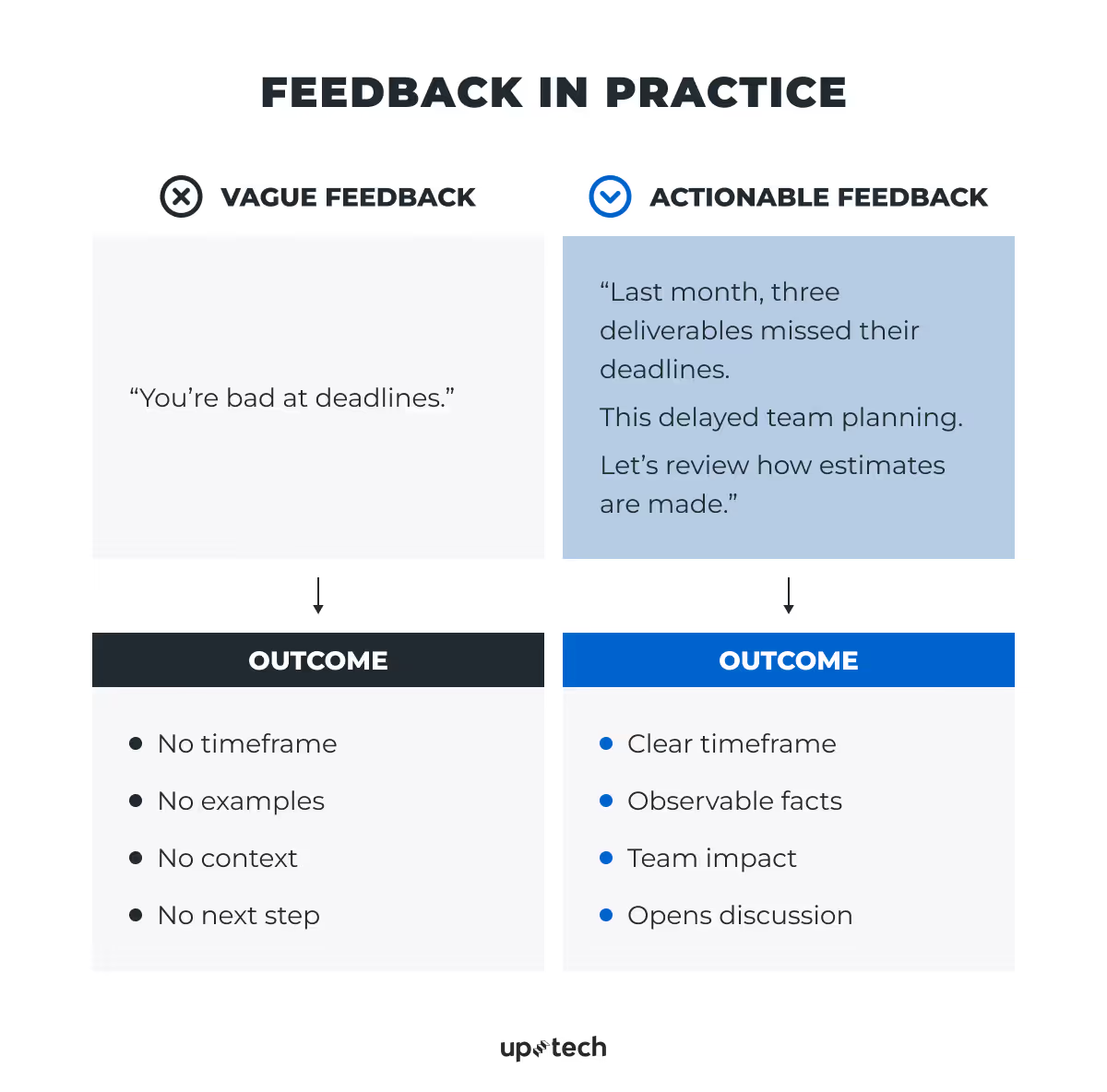
The same rule applies to critical feedback. Saying “you need to communicate better” is confusing. Pointing to a concrete moment — a meeting, a message, a decision — gives the person something they can actually work with.
I often push back on general feedback. If someone says “everything was fine” or “there were issues,” I ask for examples. Not to challenge them, but to turn opinions into usable information.
Specific feedback is easier to remember, easier to accept, and much more likely to lead to real improvement.
5. Always start with a positive point
A positive start helps to get comfortable and gain some confidence. Even when it’s followed by tough negative feedback.
Starting with something positive helps lower defensiveness and sets a collaborative tone. It signals that the conversation is about growth, not punishment. When people feel seen for what they do well, they’re more open to hearing what needs to improve — even when the feedback is difficult.

That doesn’t mean the positive part should be artificial or exaggerated. Forced praise is easy to spot and quickly undermines trust. The goal isn’t to “soften the blow,” but to anchor the conversation in reality: most people do many things right, even when something needs correction.
6. Stick to 2–3 issues
Do not try to discuss everything at once. People don’t remember too many points.
Feedback is not a data dump. When you try to cover everything at once, people stop processing the information and start protecting themselves. Even well-intentioned feedback can feel overwhelming if it turns into a long list of issues.
In practice, most people can meaningfully absorb and act on only a few points at a time. Two or three clear topics are usually enough to trigger reflection and change. Anything beyond that risks diluting the message and reducing the chance that any of it will be addressed.
Prioritization is part of your role as a manager. Decide what matters most right now. What will have the biggest impact if improved? What can wait until the next conversation? Not every issue deserves immediate attention.

After receiving feedback, people need time to process it, experiment with new behaviors, and see how things play out. Jumping straight into additional topics often interrupts that learning cycle and creates the feeling of constant dissatisfaction.
A useful mindset is to think in iterations, not conclusions. Address a small set of issues, observe progress, acknowledge improvements and only then move on to the next areas. This approach keeps feedback focused, humane, and far more effective in the long run.

7. Ask questions
You might not know all the details, or another person might not agree with your remarks. Be willing to admit you’re wrong if necessary. Feedback sharing is a two-way discussion, not a monologue.
Asking questions serves two purposes. First, it helps you validate your understanding of the situation. Second, it shows respect. When people feel heard, they’re more open to reflecting on their behavior instead of defending it.
Simple questions can change the entire tone of the discussion:
- “How did you see this situation?”
- “What was your thinking at that moment?”
- “Is there something I’m missing here?”
These questions don’t weaken your position as a leader. On the contrary, they signal maturity and confidence. Strong managers don’t need to be right all the time, they need to be effective.
Be prepared to hear something you didn’t expect. Sometimes feedback reveals gaps in process, unclear expectations, or external pressure rather than individual mistakes. And sometimes, you may realize that your initial judgment was incomplete or wrong. Admitting that builds far more trust than doubling down.
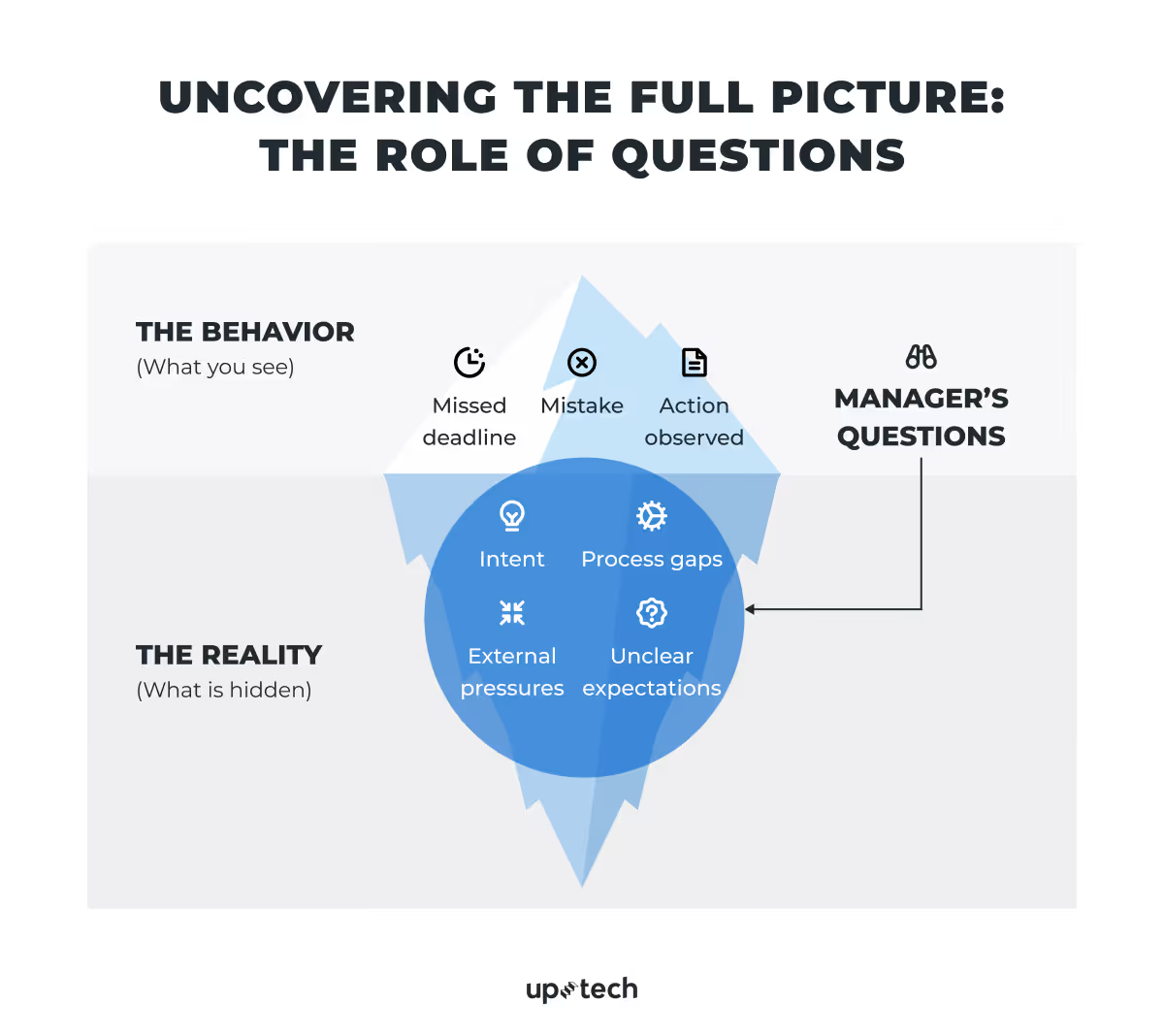
When feedback becomes a two-way discussion, it stops being about “who’s right” and starts being about what works best going forward. That’s when real improvement happens.
8. Discuss an improvement plan
Feedback without a path forward creates frustration. Once an issue is clear, the next question is always: what do we do about it? Discussing an improvement plan turns feedback from evaluation into support.
This doesn’t mean prescribing every step or taking control away from the person. The goal is to align on a direction and agree on concrete actions. Even a simple plan helps people move from reflection to execution.
A good improvement plan usually includes:
- What to focus on (one or two specific behaviors or skills)
- How to practice or improve (new approach, tool, habit, or support)
- What “better” looks like (so progress is visible, not abstract)
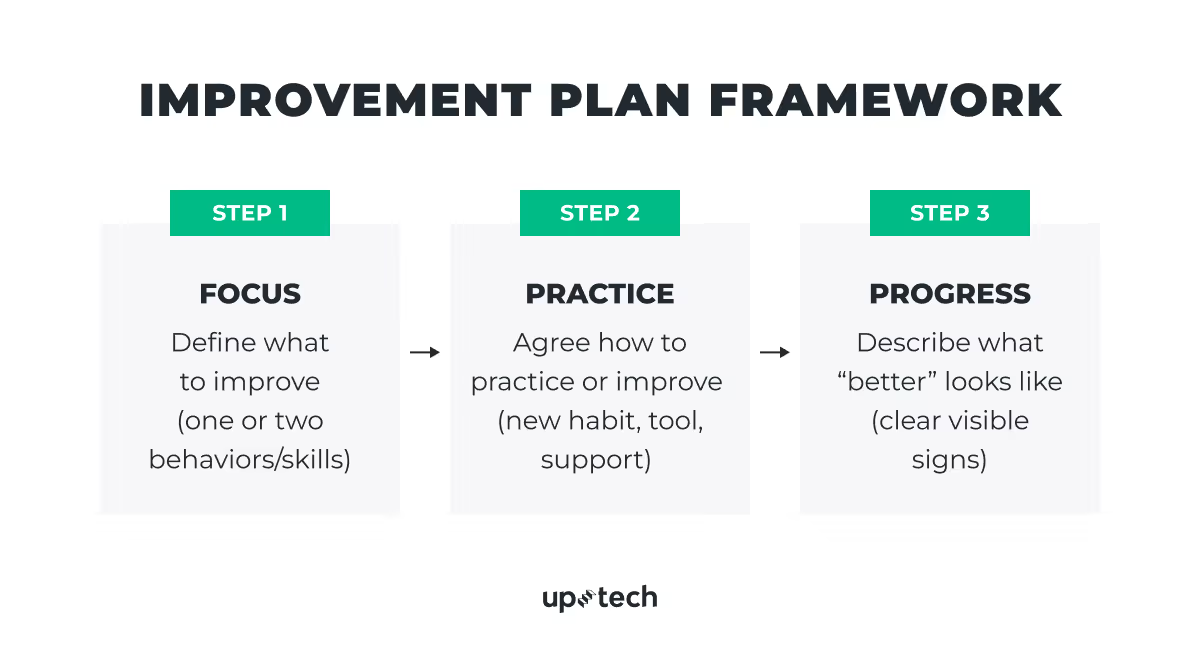
Offer suggestions, not ultimatums. You might share examples, recommend resources, or suggest small experiments. This shows that you’re invested in the person’s growth, not just pointing out problems and moving on.
It’s also important to ask what they think would help. People are far more committed to plans they help shape. Sometimes they already know what’s holding them back — they just need space and support to address it.
When feedback ends with a clear, realistic improvement plan, it leaves the conversation on a constructive note. The person walks away not just aware of the issue, but confident that improvement is possible and that they’re not expected to figure it out alone.
9. Do not criticize personality traits
Feedback should address what someone did, not who they are. Personal labels shut down learning. Once feedback turns into a judgment of character, people stop listening and start defending themselves.
Everyone makes mistakes. One missed deadline or poorly executed task does not define a person’s motivation, work ethic, or potential. Generalizing from a single incident creates fear rather than improvement — and fear never leads to better performance.
Compare the difference:
Personal and unhelpful: “You are lazy!”
Specific and constructive: “In the last three tasks, the deadlines were missed, and several errors remained in the final version. Let’s look at what got in the way and how we can prevent this next time.”
The second version keeps the conversation factual and forward-looking. It leaves room for explanation, learning, and correction rather than assigning blame.
As a manager, your role is to help people improve their behavior, not to judge their character. When feedback stays focused on actions, patterns, and outcomes, it feels fair and actionable. When it turns personal, it damages trust and rarely leads to change.
Addressing actions allows people to fix the issue without feeling attacked, which is exactly the outcome good feedback should aim for.
10. Relationships come first
We all share feedback with some goal in mind. You might want to improve performance and communication, fix mistakes, or deliver a project faster. But your goal can be achieved only when you build relationships first. Do not try to push too hard. Seek first to understand and then help. If you fail to build an open and trusting relationship, you’ll most likely fail in achieving your goal as well.
This principle is easy to understand and surprisingly hard to practice.
Have to admit, this is the mistake I made so often and still learn to avoid. I focused on the goal and forgot about the empathy. The outcome was predictable: raised emotions, damaged trust, and no real improvement.
Strong relationships change that dynamic. When people know you care about them, they’re far more willing to hear uncomfortable truths and act on them. In the long run, investing in trust saves time, energy, and repeated conversations, because feedback becomes cooperation, not confrontation.
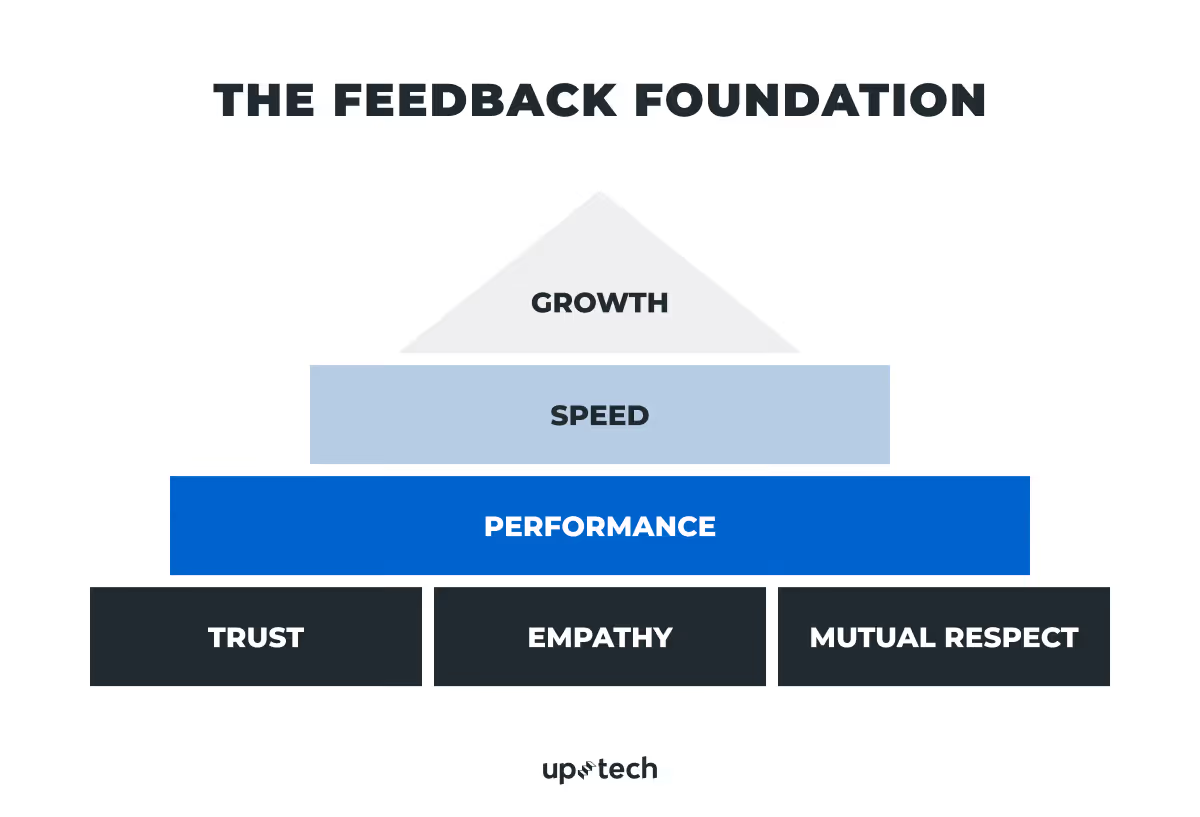
If feedback is about growth, relationships are the foundation it stands on.
11. Recognize publicly, criticize privately
Public recognition works great. It reinforces the behaviors you want to see repeated, shows appreciation, and sets a clear example for the rest of the team. When people are praised openly, they feel valued, and others understand what “good work” looks like.
Public criticism, on the other hand, almost never works. Instead of correcting behavior, it creates shame. Even if the feedback is factually correct, delivering it in front of others damages trust and triggers fear. The lesson people learn is not how to improve, but how to avoid being exposed.
Over time, this erodes psychological safety, and without psychological safety, teams rarely perform well or innovate.
Critical feedback belongs in a private, respectful conversation where context can be discussed and dignity preserved. That setting allows for openness, reflection, and real problem-solving — rather than embarrassment.
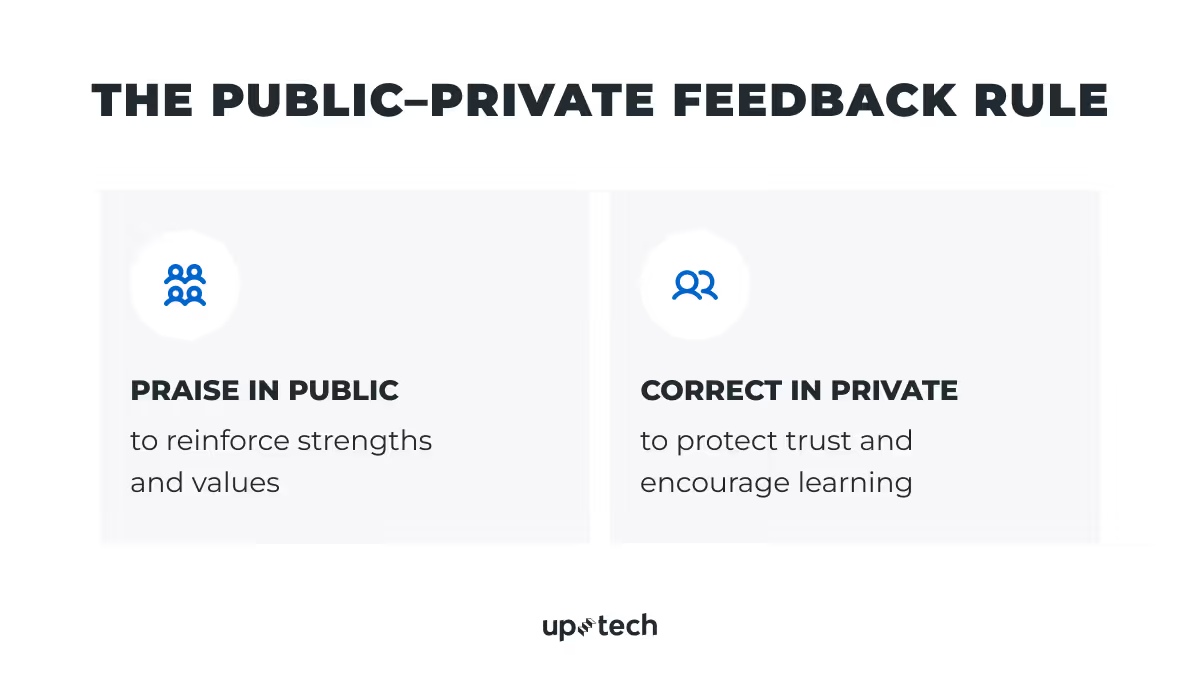
This simple discipline goes a long way in building a team where people feel safe to be honest, accountable, and engaged, which is ultimately what strong performance depends on.
12. Do not overpraise
Praise is important, but only when it’s grounded. Overpraising creates a distorted picture of reality and weakens the purpose of feedback.
Good feedback should help a person see both sides clearly:
“I did this part well — and I still have something to improve.”
That balance is what drives growth.
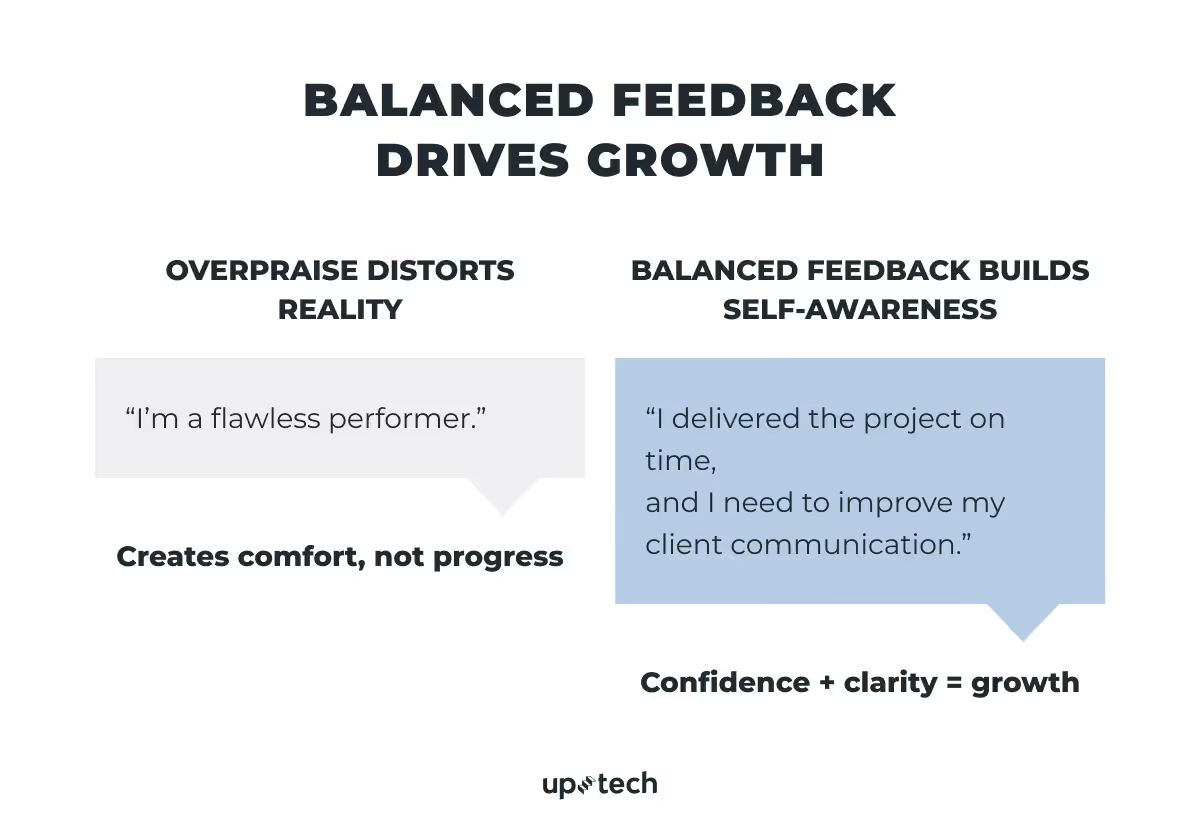
This mindset keeps people confident and self-aware. Praise should reinforce what works, while still leaving space for development. Otherwise, it turns into comfort instead of progress.
These principles apply everywhere — not only between managers and employees, but also between peers, leaders, partners, friends, and even spouses. Anytime feedback is involved, honesty paired with care matters.
At Uptech, we intentionally taught these rules across the team and introduced Feedback Sharing Fridays.
On the last Friday of each month, every team member is encouraged to exchange feedback with at least three colleagues. It doesn’t mean feedback happens only once a month — it’s simply a checkpoint, a reminder not to postpone conversations that matter.
Over time, the process became self-sustaining. People started sharing feedback proactively, helping each other grow without waiting for formal reviews or manager intervention.
Watching how this practice helped people become better professionals — and more thoughtful humans — has been one of the most rewarding parts of building the company.
Conclusion
Constructive feedback is a leadership habit. It requires intention, consistency, and care. When done well, it helps people grow, builds trust, and improves results. When done poorly, it creates fear, distance, and silence.
In practice, effective feedback means:
- Treating feedback as an ongoing habit, not a one-off conversation
- Prioritizing mindset over formulas: respect, clarity, and progress
- Preparing in advance and choosing the right moment
- Being specific and listening as much as you speak
- Focusing on actions and impact, not personalities
- Understanding that feedback only works where trust and psychological safety exist
- Sharing feedback regularly and thoughtfully to prevent small issues from becoming big ones
And last, but not least: share all feedback with care and goodwill.
Because when feedback comes from a place of respect, it doesn’t break people — it helps them grow.































.avif)